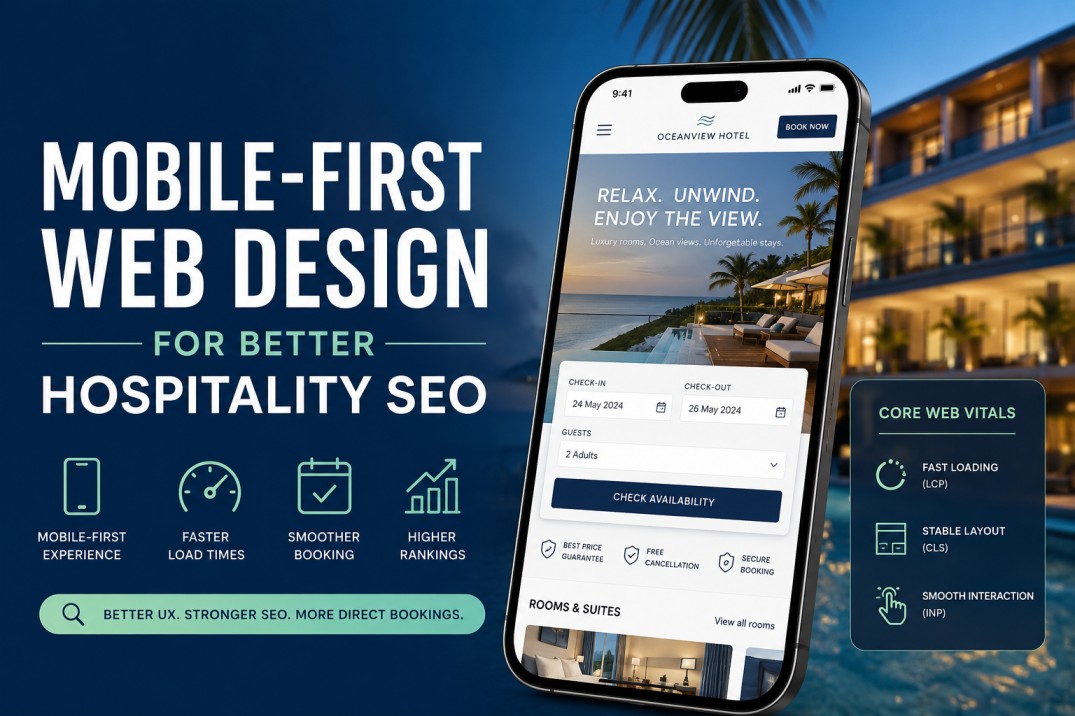
Most hotel bookings do not start with a big decision. Someone searches on their phone, opens a few hotel sites, checks the rooms, looks at the price, and quickly decides whether to stay or leave. That is where mobile-first web design starts to matter.
That is also where many hospitality websites lose people. Not because the hotel is bad, but because the mobile experience is annoying. The page loads slowly. The booking button is not obvious. Photos are heavy. The calendar is awkward to use. After that, the visitor goes back to Google or books through an OTA.
For hotels, this is not only a design issue. Slow mobile pages, unclear buttons, and awkward booking forms can make people leave before they even compare the rooms properly. A site that feels quick and simple gives the hotel a better shot at keeping the visitor, getting the direct booking, and showing Google that the page deserves attention.
Mobile-first web design helps hospitality websites rank better by making hotel pages faster, easier to use, and more reliable on phones. For hotels, this means cleaner booking forms, lighter images, faster room pages, better Core Web Vitals, and a smoother direct booking path. Search engines reward sites that work well for real users, so a strong mobile experience can support both organic visibility and direct booking revenue.
Bridging E-commerce Principles with Direct Bookings
A hotel booking engine is basically the hotel’s own checkout page, and mobile-first web design is what keeps that checkout usable on smaller screens. If it is slow, messy, or hard to use on a phone, people do not usually fight with it. They leave, compare another property, or book through an OTA because it feels easier.
So a redesign should not stop at nicer colors, cleaner fonts, or better room photos.
As explained in this guide on how to develop a mobile-friendly e-commerce website, the booking path has to feel simple from the first click to the final payment. Clear buttons, easy calendars, short forms, and pages that fit naturally on a small screen can make a real difference.
When the booking process feels less like work, guests stay longer, bounce less, and give search engines better signs that the page is useful.
Aligning Technical Architecture with Organic Search
Many hotel websites try to do too much at once. They need room calendars, prices, photos, maps, maybe even a virtual tour, but all of that can slow the site down if it is added without much care.
The problem is usually felt first on mobile. The page opens, but the booking box loads a second later. The room photos are too heavy. The price takes time to appear. The layout moves while the visitor is trying to tap something. It does not take long before someone gives up and checks another hotel.
That is one reason hotels often bring in a specialized hotel SEO company when the site becomes more than a simple brochure. It is not only about rankings. The booking engine, mobile layout, schema, page speed, and tracking all have to work without making the site feel bloated.
When the technical side is cleaner, Google can read the page more easily, and guests can use it more easily.
The Tangible Impact of Core Web Vitals
Core Web Vitals may sound like a technical detail, but they show up in very normal ways for the user. Does the page open quickly? Does the main image take forever to appear? Does the layout jump while someone is trying to tap the booking button? Those small things can decide whether a visitor stays or leaves.
Google uses speed and mobile usability as part of how it judges pages, but the bigger issue is simple: slow sites lose bookings. Research evaluating millions of page views found that a site loading in one second can have an e-commerce conversion rate 2.5 times higher than a site loading in five seconds. For a hotel, that gap can mean many missed direct bookings, especially when the guest is already comparing several options.
So Core Web Vitals are not just numbers for developers to look at after a site audit. They are tied to revenue, user trust, and search performance. If the page feels slow or unstable, the hotel gives people another reason to leave before they book.
Key Mobile Innovations Reshaping the Guest Journey
Mobile fixes are not always exciting, but they matter. A guest does not care whether the site uses the newest setup. They care whether the page opens, the photos load, the price is clear, and the booking form does not get in the way.
The most useful changes are usually simple:
- PWA features can make the mobile site feel smoother without asking people to install an app.
- A headless CMS can make it easier to show rooms, prices, and availability without slowing every page down.
- WebP and AVIF images help keep hotel photos light, which is important because travel pages are usually image-heavy.
- Caching and a CDN can make the site faster for guests searching from different places.
- Digital wallets can remove some of the pain from mobile checkout.
That is really the whole point. The technology should make booking feel easier, not turn the site into something heavy and overbuilt. A hotel does not need every new feature. It needs a mobile page that loads properly, shows the right details, and lets people book without getting annoyed.
To maintain a competitive edge, hospitality platforms must embrace modern technical standards tailored to mobile users. For hospitality brands, mobile-first web design is less about trend-chasing and more about removing small problems that stop people from booking.
Why is mobile-first web design important for hospitality SEO?
Mobile-first web design is important because many hotel searches now happen on phones, not desktop computers.
If a hotel site loads quickly, shows rooms clearly, and makes booking simple on mobile, users are more likely to stay on the page and search engines get better quality signals.
How does mobile speed affect hotel bookings?
Slow mobile pages can make visitors leave before they compare rooms, check prices, or complete the booking form.
For hotels, even small delays can push guests back to Google or an online travel agency, which means fewer direct bookings.
What should a mobile hotel website include?
A mobile hotel website should include fast-loading room pages, clear prices, easy calendars, visible booking buttons, readable details, and lightweight images.
The goal is to make the booking path simple enough that guests do not need to pinch, zoom, search around, or restart the process.
Do Core Web Vitals matter for hospitality websites?
Yes, Core Web Vitals matter because they measure real issues users feel, such as slow loading, layout movement, and delayed interaction.
For hospitality websites, better Core Web Vitals can support both user experience and organic search performance.
Can mobile-first design increase direct bookings?
Mobile-first design can help increase direct bookings when it removes friction from the booking process.
A faster site, clearer room information, simpler forms, and easier mobile checkout can make guests more comfortable booking directly with the hotel.

Andrej Fedek is the creator and one-person owner of three blogs: InterCool Studio, CareersMomentum, and Bettegi. As an experienced marketer, he is driven by turning leads into customers with White Hat SEO techniques. Besides being a boss, he is a real team player with a great sense of equality.