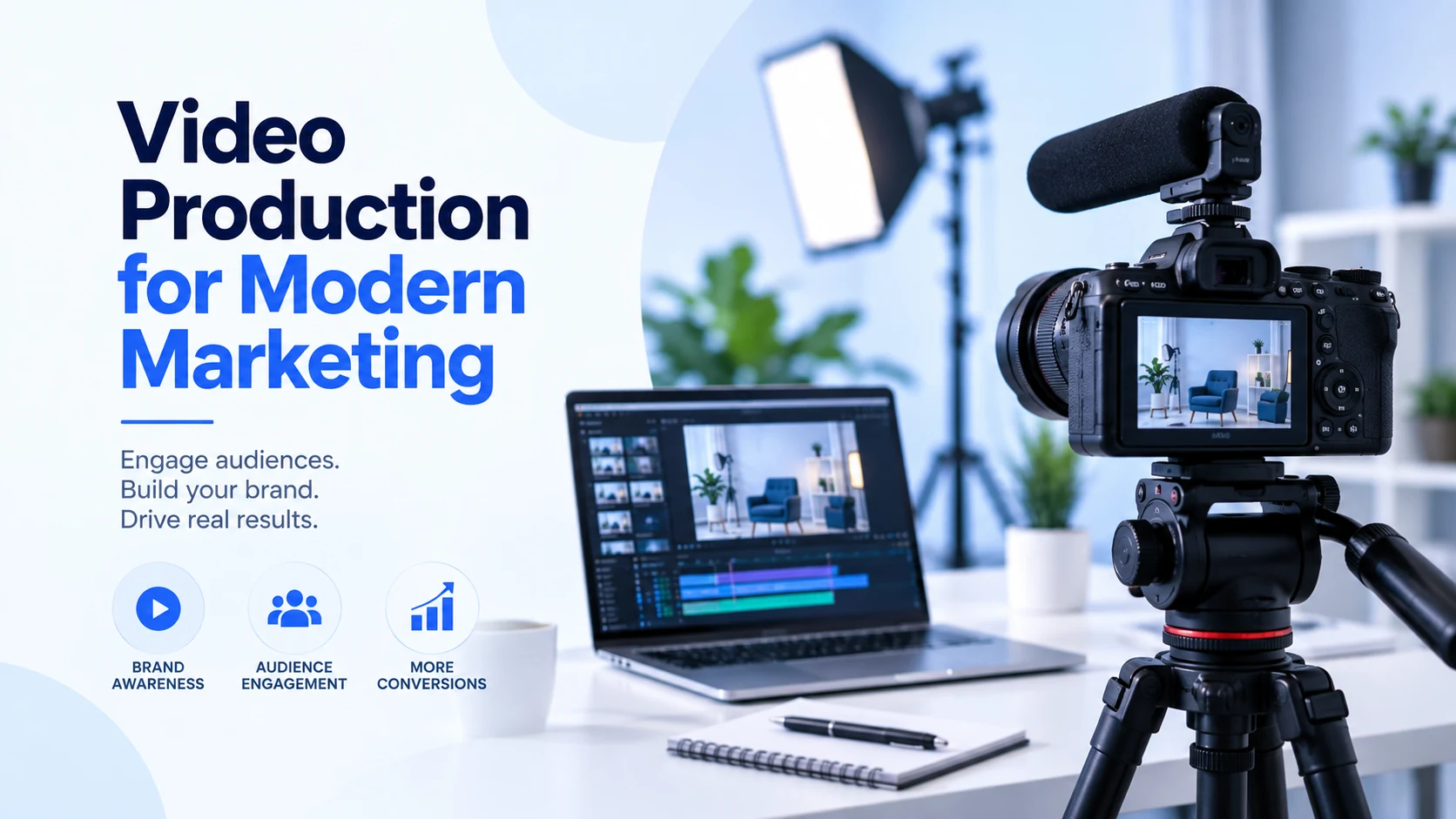
Video has become a genuinely core part of how businesses talk to their audience online now. People run into video everywhere — websites, social media, search results, email campaigns, digital ads — making it one of the most versatile formats for delivering a message.
Unlike text alone, video combines visuals, spoken language, music, movement, and storytelling at once. That combination lets businesses explain complex ideas, show off a product, introduce their people, or communicate brand values, all in a relatively short window of someone’s attention.
So professional video production isn’t just about shooting attractive footage. It’s about planning the message, understanding who you’re talking to, choosing the right format, and producing something that supports a bigger marketing goal—not just looks good on its own.
Professional video production helps businesses communicate complex ideas, strengthen brand recognition, and create content that works across websites, social media, email, and advertising. Its value comes from combining clear messaging with strong visuals, sound, editing, and platform-specific formats that support each stage of the customer journey. The best results come when video is planned around clear marketing goals, distribution channels, and measurable performance from the start.
Building Brand Awareness Through Video
Brand awareness really comes down to how consistently and clearly a business communicates with its audience over time. Video helps establish recognizable visual and verbal elements — a company’s tone, design style, messaging, personality, all of it.
A well-planned video can genuinely introduce a business to people who’ve never heard of it before. An intro brand video might explain what a company does and why it exists in the first place, while a short educational piece can demonstrate real expertise in a particular industry.
Consistency matters a lot here. Businesses that produce video regularly tend to develop a recognizable style across platforms over time, making their marketing easier for audiences to identify and connect with.
Increasing Audience Engagement
Modern audiences have endless choices about what they watch and where their attention goes. Video gives businesses a real shot at communicating information in a format that’s both accessible and genuinely engaging — not something people scroll straight past.
Different video formats serve different purposes. Short clips suit social platforms well, while longer interviews, demos, webinars, or educational content can go into a lot more detail.
Social media video production, specifically, is genuinely useful for building content around the actual viewing habits of a given platform. Instead of producing one generic video and slapping it up everywhere, businesses can think through aspect ratio, video length, captions, pacing, and what audiences on each channel actually expect.
Engagement also comes down to relevance. A beautifully produced video won’t necessarily perform well if the content doesn’t actually answer a question, solve a problem, entertain, or give someone something useful. Production quality works best when it’s supporting a clear purpose, not standing in for one.
Supporting Different Stages of the Customer Journey
Video can genuinely contribute across several stages of the customer journey. At the awareness stage, businesses can use introductory or educational videos to explain an issue and build some initial familiarity with their brand.
During the consideration stage, product demos, customer stories, comparisons, and expert interviews help potential customers actually understand their options — the kind of information that would otherwise need a wall of text to explain properly.
At the decision stage, videos can answer common questions, show exactly how a product works, or explain what implementation and support actually looks like. After the purchase, instructional videos help customers get real use out of products or services they’ve bought.
That makes video useful well beyond traditional advertising — it becomes part of a company’s broader information and customer-communication strategy, not just a marketing gimmick.
Connecting Video With Digital Marketing
Professional video works best when it’s actually woven into the rest of a business’s digital marketing, not treated as a separate one-off project. A single production can often feed content into multiple channels, as long as it’s adapted properly for each one.
A longer interview, for instance, could become a website video, several shorter social clips, written quotes for a blog post, and snippets for an email campaign — all from one shoot. That approach makes production a lot more efficient while keeping the messaging consistent across every channel.
Search visibility benefits too, when video’s backed by relevant page content, descriptive titles, transcripts, captions, and proper metadata. Businesses should really be thinking about where a video’s actually going to live, and what they want a viewer to do after watching it — before the camera even starts rolling.
So the production process should genuinely start with distribution and marketing goals in mind, not treat them as an afterthought once filming’s already wrapped.
Why Professional Production Actually Matters
Professional production improves a lot of the details in a marketing video — lighting, sound, composition, editing, pacing, visual consistency. All of that shapes how easily an audience can actually follow and engage with what they’re watching.
Audio deserves special attention here. Bad sound can ruin otherwise great footage fast, while clear dialogue and controlled background noise genuinely improve the whole viewing experience more than people expect.
Careful planning also cuts down on the usual problems — unclear messaging, inconsistent visuals, videos that drag on too long, weak calls to action. Pre-production work like scripting, storyboarding, location planning, and shot lists makes the actual filming and editing a lot smoother down the line.
Businesses looking for local expertise might consider video production Melbourne when planning a project that needs real professional filming, editing, and production support behind it.
Measuring How Well the Video Actually Works
Making the video is really just one part of a successful strategy. Businesses also need to look at how audiences are actually responding to it.
A good metric to look at would be views, watch time, completion rates, engagement, website traffic, lead generation and conversions. What is really important depends on the purpose of the video – an awareness video is mostly evaluated based on reach and viewing behaviour while a product demo is probably more closely related to website visits or enquiries.
Performance data then informs future videos. If people are bailing early then the intro probably needs to be more direct. If you’re getting good engagement with educational videos, then it’s a good sign to look out for similar themes in the future.
Conclusion
Professional video production has genuinely become a practical part of modern marketing, supporting brand awareness, audience engagement, customer education, and broader digital strategy all at once. Its real value comes not just from how polished it looks, but from having a clear purpose, a relevant message, the right format, and an actual distribution plan behind it.
Businesses that treat video as part of an integrated marketing strategy — rather than a standalone project — end up using the format a lot more effectively, creating content that genuinely informs audiences while still driving measurable communication and business results.
Why is professional video production important for marketing?
Professional video production helps businesses communicate clearly while maintaining strong visual, audio, and brand consistency.
It also makes it easier to create content around specific marketing goals instead of producing video that simply looks polished.
How can video improve brand awareness?
Video gives businesses a consistent way to present their tone, visual identity, messaging, people, and expertise.
Publishing recognizable video content across multiple channels can make a brand easier for audiences to remember over time.
What types of marketing videos can businesses create?
Common formats include brand videos, product demonstrations, customer stories, interviews, webinars, educational videos, and short social media clips.
The right format depends on the audience, platform, stage of the customer journey, and the goal of the campaign.
How should video be adapted for different marketing channels?
Businesses should adapt factors such as video length, aspect ratio, captions, pacing, and calls to action for each platform.
A longer website or interview video can also be repurposed into shorter clips for social media, email, and paid campaigns.
How can businesses measure video marketing performance?
Useful metrics include views, watch time, completion rate, engagement, website traffic, leads, and conversions.
The most relevant metric depends on the goal, with awareness videos usually focused on reach and viewing behavior while product or campaign videos may be measured against enquiries or conversions.

Andrej Fedek is the creator and one-person owner of three blogs: InterCool Studio, CareersMomentum, and Bettegi. As an experienced marketer, he is driven by turning leads into customers with White Hat SEO techniques. Besides being a boss, he is a real team player with a great sense of equality.