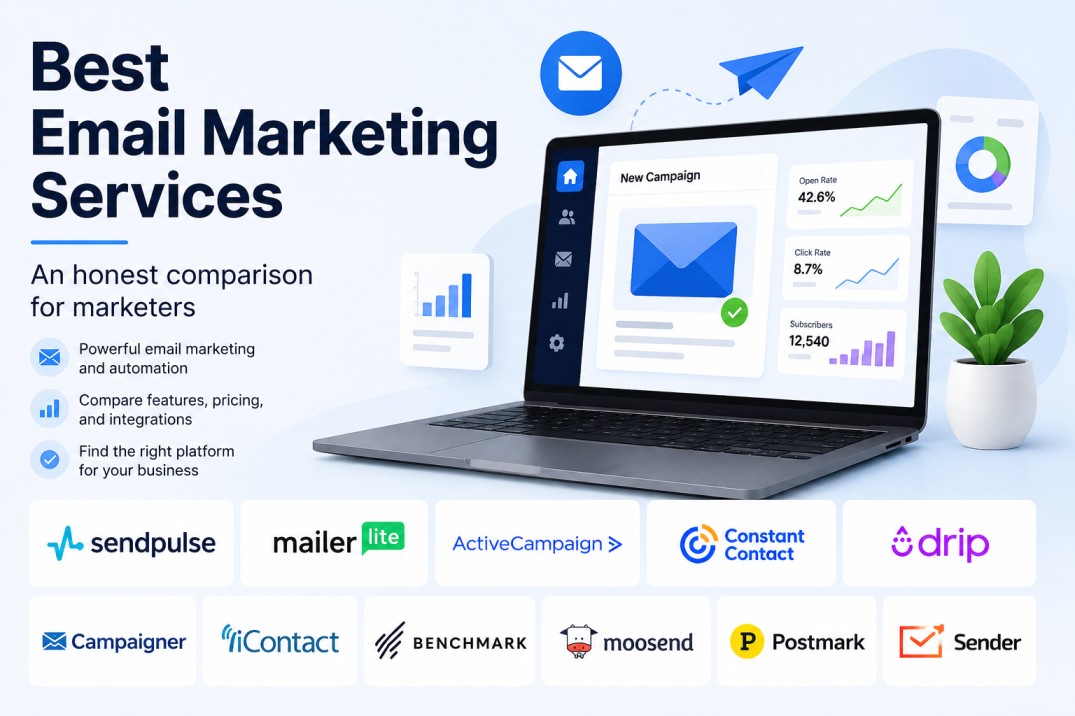
Email marketing continues to be one of the most effective ways for businesses to connect with their audiences. Despite the rise of social media and instant messaging, email remains a channel with unmatched reach, ROI, and flexibility. With dozens of platforms offering different features, pricing models, and levels of complexity, finding the best email marketing services for your business can take more time than expected.
That’s why we’ve created this guide: a straightforward, honest comparison of the 10 best email marketing services. Each section covers the platform’s strengths, weaknesses, pricing, and suitability for different types of users. Whether you’re a small business, an e-commerce store, or a growing enterprise, this guide will help you decide which service is the best fit for your goals.
The best email marketing services stand out for different reasons, so the right choice depends on how you plan to use the platform.
Email marketing services help businesses collect subscribers, create campaigns, automate follow-ups, and track results. The best platform depends on factors such as budget, list size, automation needs, e-commerce features, integrations, and the level of technical experience required.
1. SendPulse
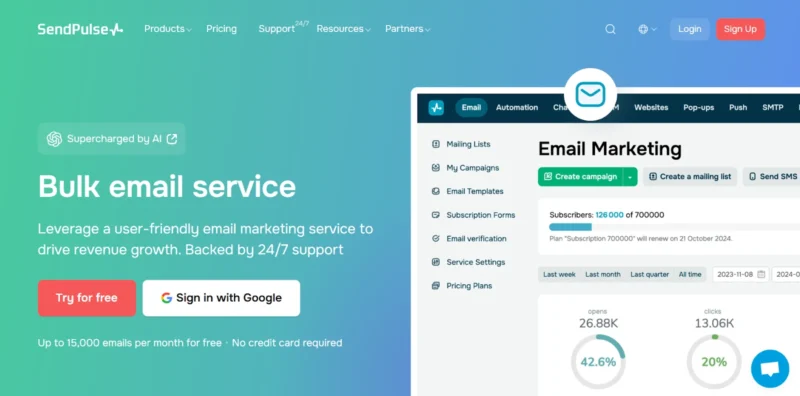
SendPulse has carved out a strong position in 2025 as one of the most versatile and affordable all-in-one marketing platforms. Unlike many providers that only focus on email, SendPulse brings together email campaigns, SMS, chatbots, and CRM features under one roof. This makes it especially attractive for small and midsize businesses (SMBs) that want multi-channel engagement without juggling multiple tools.
Key Features
- Omnichannel Automation – Build workflows that combine email, SMS, push, and chatbots.
- Customer Data Platform (CDP) – Centralize subscriber data for smarter segmentation and personalization.
- Drag-and-Drop Editor – Intuitive tools for email creation with pre-designed templates.
- Segmentation & Personalization – Dynamic segmentation based on subscriber behavior and attributes.
- Mobile Apps – Manage campaigns, view reports, and stay connected on iOS and Android.
- Team Collaboration – Multi-user support with role-based permissions.
Pricing
- Free Plan: Up to 500 subscribers and 15,000 emails/month — one of the most generous in the industry. 12,000 free emails with SMTP service for transactional emails.
- Paid Plans: Start from $8/month for 500 subscribers and unlimited emails.
Ease of Use
SendPulse is known for its user-friendly dashboard and clear navigation. Beginners can start sending campaigns quickly, while more advanced users benefit from automation flows and integrations.
Integrations
Connects easily with Shopify, WooCommerce, WordPress, Zapier, Pipedrive, Zoho, HubSpot, and more, enabling seamless ecommerce and CRM workflows.
Customer Support
- 24/7 Live Chat
- Email & Phone Support
- Knowledge Base & Learning Center
Pros
- One of the few multi-channel platforms (not just email).
- Generous free plan for small businesses.
- Strong focus on automation and data-driven campaigns.
- Available in multiple languages (English, Spanish, Portuguese, Ukrainian, Turkish, Russian).
Cons
- Interface can feel slightly dated in some areas.
- No dedicated migration concierge (self-service migration required).
- Uses shared IPs only (no dedicated IPs, which may affect high-volume senders).
2. Constant Contact
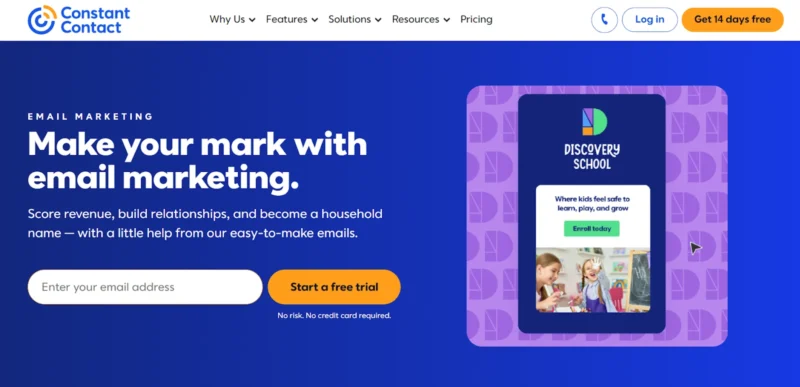
Constant Contact has long been a household name in email marketing, especially for small businesses and nonprofits. Its reputation is built on ease of use, reliable performance, and a unique set of event management tools that most competitors don’t offer. For beginners or organizations that need simple but effective campaigns, Constant Contact remains a strong choice.
Key Features
- Drag-and-Drop Editor – Quickly create professional emails with customizable templates.
- Event Management – Built-in tools for RSVPs, ticketing, and attendee tracking.
- Automation – Welcome series, birthday emails, and simple drip campaigns.
- Reporting Dashboard – Track campaign performance with clear metrics.
- Social Media Tools – Post and manage updates across platforms directly from the dashboard.
Pricing
- Free Trial: 14 days.
- Paid Plans: Starting at ~$12/month for 500 subscribers and 5,000 emails.
Ease of Use
Constant Contact is designed for simplicity. Its clean interface and beginner-friendly setup make it one of the easiest platforms for non-technical users to get started with email marketing.
Integrations
Works seamlessly with Shopify, WooCommerce, Eventbrite, QuickBooks, Salesforce, and other popular tools.
Customer Support
- Phone Support
- Live Chat & Email
- Knowledge Base & Community Forum
Pros
- Standout event management features.
- Beginner-friendly with a minimal learning curve.
- Strong customer support and onboarding guidance.
Cons
- No permanent free plan (only a short trial).
- Pricing increases quickly with larger contact lists.
- Limited advanced automation compared to specialized platforms.
3. Sender
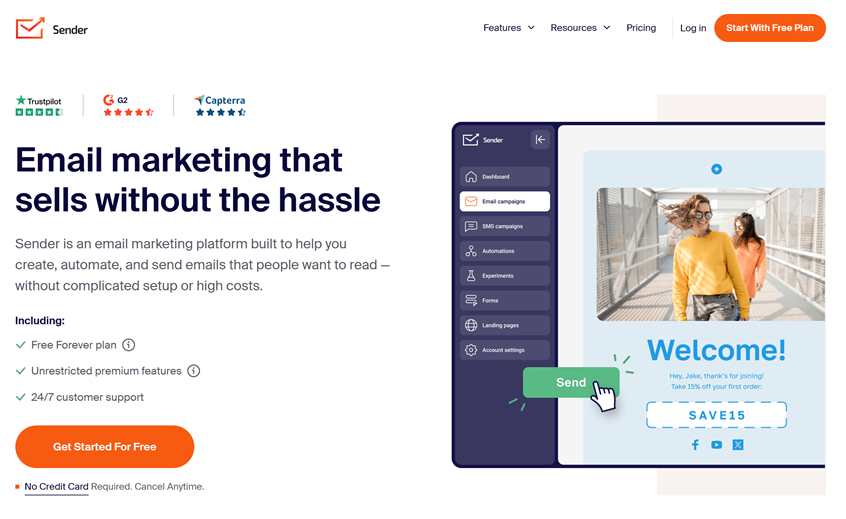
Sender has built a strong reputation as a feature-rich email marketing platform designed for small and growing businesses that want professional results without the steep price tag. It combines newsletter tools, marketing automation, and transactional emails in a single user-friendly platform, making it a versatile choice for ecommerce stores, content creators, and SMBs that need reliable bulk emailing alongside everyday campaign management.
Key Features
- Drag-and-Drop Email Builder – Create responsive newsletters quickly with a library of free templates.
- Marketing Automation – Unlimited workflows with custom events, triggers, and segmentation.
- Transactional Emails – Send order confirmations, password resets, and notifications via SMTP or API.
- Popups & Signup Forms – Built-in tools to grow subscriber lists directly from your website.
- Segmentation & Personalization – Target audiences based on behavior, attributes, and engagement.
- Multichannel Capabilities – Combine email with SMS in unified workflows.
Pricing
- Free Plan: Up to 2,500 subscribers and 15,000 emails/month — one of the most generous free plans available.
- Paid Plans: Starting at ~$7/month for 1,000 subscribers and 12,000 emails.
Ease of Use
Sender offers an intuitive interface that allows beginners to set up campaigns within minutes. Its straightforward dashboard and premade automation workflows make it accessible to non-technical users while still offering depth for experienced marketers.
Integrations
Connects with Shopify, WooCommerce, WordPress, PrestaShop, Zapier, and other ecommerce and CMS platforms.
Customer Support
- 24/7 Live Chat
- Email Support
- Help Center & Knowledge Base
- Sender Academy & Training Videos
Pros
- Generous free forever plan with high email volume.
- Strong deliverability rates for both marketing and transactional emails.
- Advanced automation with custom events at an affordable price point.
- Beginner-friendly interface with fast setup.
Cons
Fewer native integrations compared to larger enterprise platforms.
Sender branding appears on emails in the free plan.
No built-in CRM for sales pipeline management.
4. ActiveCampaign
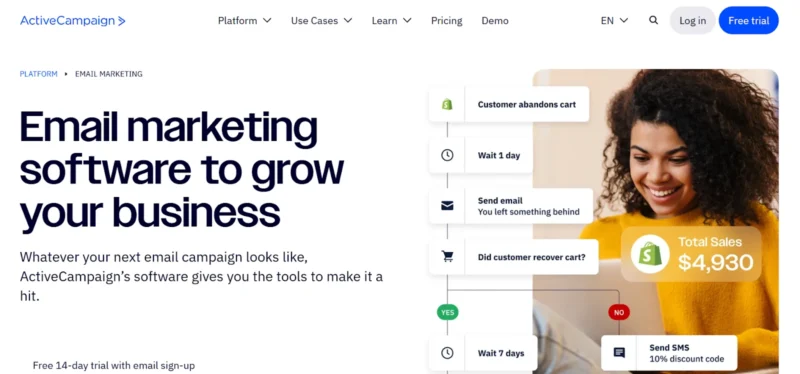
ActiveCampaign has become one of the most powerful and trusted platforms for advanced email marketing and automation. It’s particularly popular with businesses that want to move beyond simple newsletters and build highly personalized customer journeys. With its built-in CRM, predictive features, and industry-leading automation, Although ActiveCampaign is a top choice for marketers who prioritize depth and precision, some ActiveCampaign alternatives are worth considering.
Key Features
- Automation Builder – Visual drag-and-drop workflows for complex, multi-step campaigns.
- Personalization – Dynamic content tailored to subscriber actions and preferences.
- Segmentation – Advanced audience targeting with behavioral and demographic triggers.
- CRM Integration – Built-in sales CRM for seamless lead and pipeline management.
- Predictive Sending – Machine learning optimizes send times for better engagement.
Pricing
- Free Trial: 14 days.
- Paid Plans: Starting at ~$15/month for 1,000 contacts and 10,000 emails.
Ease of Use
ActiveCampaign has a clean and modern interface, but its extensive capabilities mean there’s a learning curve. It’s best suited for marketers who need advanced workflows and are ready to invest time in setup.
Integrations
Connects with Shopify, WooCommerce, Salesforce, Zapier, WordPress, and 850+ other apps.
Customer Support
- Live Chat & Email Support
- Tutorials, Webinars & Training Resources
- Community Forum
Pros
- Among the most powerful automation tools in the industry.
- Built-in CRM aligns sales and marketing.
- Scales effectively with growing businesses.
Cons
- No permanent free plan (trial only).
- Pricing rises significantly with larger contact lists.
- Can feel overwhelming for beginners due to its depth.
5. Drip
Drip is a platform designed primarily for e-commerce businesses that want to blend email marketing with deep customer insights. Its strength lies in personalization and integrations with major e-commerce platforms. In 2025, Drip stands out as a tool that helps online retailers drive revenue through smarter automation, segmentation, and data-driven campaigns.
Key Features
- E-commerce CRM – Tracks customer behavior, purchases, and lifetime value.
- Automation Workflows – Prebuilt and customizable workflows tailored for online stores.
- Personalized Campaigns – Dynamic content and product recommendations.
- Segmentation – Target audiences based on shopping behavior, preferences, and engagement.
- Revenue Attribution – Reports that tie campaigns directly to sales performance.
Pricing
- Free Trial: 14 days.
- Paid Plans: Starting at ~$39/month for up to 2,500 contacts.
Ease of Use
Drip offers a sleek and modern interface, with an emphasis on e-commerce usability. While not as simple as beginner tools, its intuitive design makes it accessible for store owners with moderate marketing experience.
Integrations
Works natively with Shopify, WooCommerce, Magento, BigCommerce, and Zapier, along with hundreds of e-commerce apps.
Customer Support
- Email & Live Chat
- Knowledge Base & Guides
- Webinars & Community Resources
Pros
- Built specifically for e-commerce marketing automation.
- Strong personalization and segmentation tools.
- Clear revenue attribution for ROI tracking.
Cons
- No free plan (trial only).
- Pricing is higher compared to entry-level tools.
- Focused primarily on e-commerce (less versatile for non-retail businesses).
Among the best email marketing services for online stores, the strongest options usually combine customer data, automation, and direct revenue tracking.
6. Campaigner
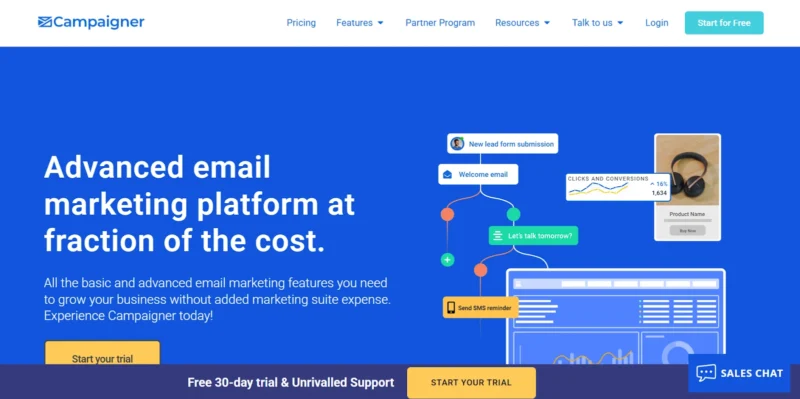
Campaigner is a feature-rich email marketing platform tailored for marketers who want advanced automation and testing capabilities. It’s best suited for mid-sized businesses and enterprises looking for tools that go beyond the basics. With its emphasis on A/B testing, personalization, and reporting, Campaigner is designed for data-driven marketers in 2025.
Key Features
- Advanced Automation – Build multi-step workflows with triggers and conditions.
- A/B & Multivariate Testing – Test subject lines, content, and send times.
- Segmentation – Target customers based on behavior, demographics, and custom fields.
- E-commerce Features – Abandoned cart emails, product recommendations, and purchase tracking.
- Reporting & Analytics – Real-time insights into engagement and revenue performance.
Pricing
- Free Trial: 30 days.
- Paid Plans: Starting at ~$14/month for 1,000 contacts.
Ease of Use
While Campaigner offers powerful features, the interface is more complex compared to beginner-friendly platforms. It’s best suited for users who are comfortable with analytics and testing.
Integrations
Integrates with Shopify, Magento, Salesforce, Zoho, WordPress, and many other business tools.
Customer Support
- Phone, Email & Live Chat Support
- Knowledge Base
- Training Resources & Webinars
Pros
- Strong testing capabilities (A/B and multivariate).
- Advanced automation workflows.
- Great for businesses focused on data-driven optimization.
Cons
- Higher starting price than most entry-level platforms.
- Less beginner-friendly; can feel overwhelming for newcomers.
- No permanent free plan.
The best email marketing services do not all solve the same problem, which is why pricing alone should not decide the ranking. Also, check out our article about SMS marketing platforms.
7. iContact
iContact is an email marketing platform that emphasizes simplicity and affordability, making it a popular choice for small businesses, nonprofits, and organizations with limited resources. It provides the essential tools needed for professional email campaigns without overwhelming users with unnecessary complexity.
Key Features
- Drag-and-Drop Editor – Easy-to-use templates for quick campaign creation.
- Automation – Basic autoresponders, welcome emails, and simple workflows.
- List Management – Import, segment, and manage subscriber lists efficiently.
- A/B Testing – Test subject lines and email content for optimization.
- Reporting – Track opens, clicks, and engagement metrics.
Pricing
- Free Trial: 30 days.
- Paid Plans: Starting at ~$9/month for 500 contacts.
Ease of Use
iContact is beginner-friendly with a straightforward interface designed for users who need quick setup and minimal training.
Integrations
Integrates with Salesforce, Zoho, WordPress, Shopify, and Zapier.
Customer Support
- Phone & Email Support
- Live Chat
- Knowledge Base & Resources
Pros
- Very affordable entry-level pricing.
- Easy for beginners and non-technical users.
- Strong customer support options.
Cons
- Limited advanced automation compared to competitors.
- No permanent free plan.
- Features may feel basic for fast-growing businesses.
8. VerticalResponse
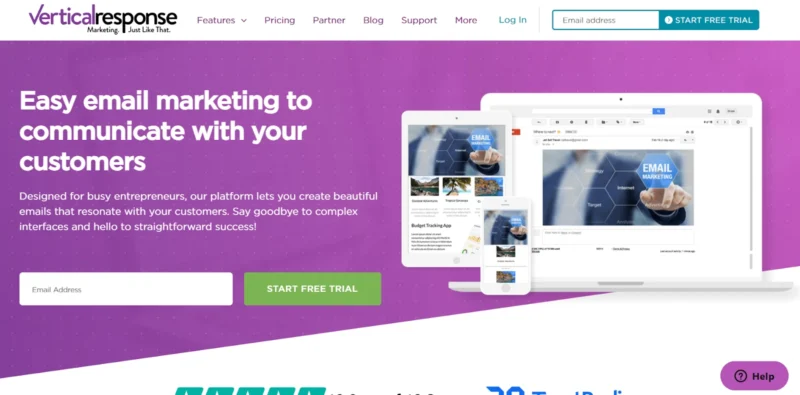
VerticalResponse is an email marketing platform that focuses on simplicity and quick campaign creation. It’s particularly popular among small businesses and nonprofits that want an easy-to-use tool without steep learning curves. Its balance of essential features and affordability makes it a solid entry-level choice in 2025.
Key Features
- Drag-and-Drop Editor – Create emails quickly with pre-designed templates.
- Automation – Autoresponders, welcome series, and triggered emails.
- List Management – Import contacts, segment lists, and manage subscribers.
- A/B Testing – Test subject lines and optimize performance.
- Reporting – Real-time tracking of opens, clicks, and unsubscribes.
Pricing
- Free Trial: 60 days.
- Paid Plans: Starting at ~$13/month for unlimited emails.
Ease of Use
VerticalResponse has a clean, beginner-friendly interface that allows new users to launch campaigns quickly without technical skills.
Integrations
Connects with Salesforce, Shopify, Magento, Zoho, and WordPress.
Customer Support
- Email & Live Chat Support
- Knowledge Base & Tutorials
- Community Resources
Pros
- Generous 60-day free trial.
- Easy to set up and use for beginners.
- Affordable pricing for small businesses.
Cons
- No permanent free plan.
- Lacks advanced automation features.
- Limited scalability for growing enterprises.
9. Postmark
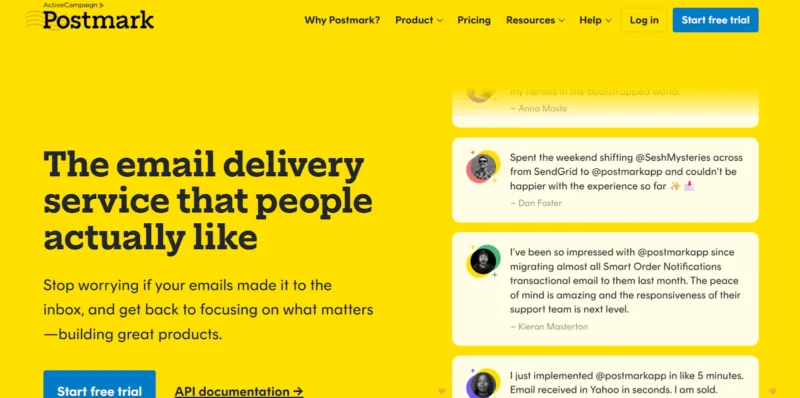
Postmark is a specialized transactional email service built for developers and businesses that need reliable, fast delivery of critical messages like password resets, order confirmations, and notifications. Unlike full-scale marketing platforms, Postmark focuses primarily on transactional email performance and deliverability, making it a trusted tool for SaaS companies, apps, and e-commerce businesses.
Key Features
- Transactional Email API (SMTP & HTTP) – Fast, secure, and reliable delivery.
- Email Templates – Pre-built and customizable transactional templates.
- Message Streams – Separate transactional, promotional, and broadcast emails for better deliverability.
- Detailed Analytics – Real-time delivery, open, and engagement tracking.
- High Deliverability – Focused infrastructure to maximize inbox placement.
Pricing
- Free Trial: Includes 100 test emails.
- Paid Plans: Start at ~$15/month for 10,000 emails, with scalable pricing tiers.
Ease of Use
Postmark is developer-friendly, with straightforward setup and excellent documentation. It’s not designed for beginners or marketers needing drag-and-drop campaign tools.
Integrations
Works with platforms like Zapier, WordPress, Django, Rails, and many more via API/SMTP.
Customer Support
- Email Support (fast response times).
- Extensive Documentation & Developer Guides.
- Knowledge Base & Tutorials.
Pros
- Outstanding deliverability and speed for transactional emails.
- Clear segmentation of email streams for better IP reputation.
- Transparent, simple pricing model.
- Developer-first design and strong API.
Cons
- Not intended for marketing automation or bulk promotional campaigns.
- No drag-and-drop campaign builder.
- Limited to transactional and system emails.
Final Thoughts
Choosing the right email marketing platform ultimately comes down to your business goals, budget, and level of experience. Some tools shine for beginners with simple, user-friendly features, while others offer advanced automation and personalization designed for larger organizations. What’s clear, however, is that email marketing continues to evolve into a multi-channel, data-driven discipline that’s more powerful than ever. Many popular CRM platforms offer email marketing as a primary means of communication.
For small businesses, startups, and growing brands, the best email marketing services usually combine reasonable pricing, a simple setup, and enough automation to support future growth. This is where SendPulse truly stands out, offering a generous free plan, intuitive tools, and the added advantage of multi-channel marketing—including SMS and chatbots. It allows new marketers to get started quickly, while also giving them the flexibility to scale without switching platforms as their needs grow.
More advanced businesses may gravitate toward platforms like ActiveCampaign, which provide sophisticated automation, AI-powered personalization, and enterprise-level scalability. E-commerce brands, on the other hand, will find dedicated tools like Drip or SendPulse invaluable for creating personalized, revenue-driven campaigns.
The best email marketing services are not always the ones with the longest feature list. A simpler platform may work better if it aligns with your team, budget, and campaign needs.
In the end, there is no one-size-fits-all solution. Each of the ten platforms featured here has strengths that make it the “best” for a particular type of marketer. The key is to identify where you are on your marketing journey and choose the service that aligns best with your current needs while leaving room for future growth. For many businesses just starting out or seeking a cost-effective all-in-one tool, SendPulse remains the smartest long-term choice.
What is an email marketing service?
An email marketing service is a platform for collecting subscribers, creating campaigns, sending messages at scale, and tracking results.
Most services also include templates, list segmentation, automated sequences, signup forms, and tools for managing consent and unsubscribes.
What should you compare before selecting an email marketing platform?
Compare the contact limits, monthly sending allowance, automation options, integrations, reporting tools, and support available on each plan.
You should also check how the price changes as your list grows, since an affordable entry plan may become expensive at a higher contact tier.
Are free email marketing plans suitable for small businesses?
A free plan can work well while your subscriber list and sending volume remain small.
Check whether the free tier limits automation, templates, reporting, support, or branding before building your entire workflow around it.
Which email marketing features are most useful for e-commerce stores?
Online stores often need abandoned cart emails, product recommendations, purchase-based segmentation, customer lifecycle workflows, and revenue attribution.
A direct integration with your e-commerce platform can also reduce setup work and keep customer and order data synchronized.
When do you need advanced email automation?
Advanced automation becomes useful when one welcome email or a basic newsletter no longer covers the way customers interact with your business.
It allows you to trigger different messages based on purchases, page visits, email engagement, lead status, dates, and other customer actions.
What is the difference between marketing and transactional email services?
Marketing platforms handle newsletters, promotions, audience segmentation, signup forms, and automated campaigns sent to subscriber lists.
Transactional services focus on individual system messages such as receipts, password resets, delivery updates, and account notifications.
Can you move your subscriber list to another email marketing service?
Most platforms let you export contacts and import them into another service, although custom fields, tags, templates, and automation workflows may require extra work.
Clean the list before moving it, preserve consent records, and test the new sending setup with a smaller group before launching a full campaign.

Andrej Fedek is the creator and one-person owner of three blogs: InterCool Studio, CareersMomentum, and Bettegi. As an experienced marketer, he is driven by turning leads into customers with White Hat SEO techniques. Besides being a boss, he is a real team player with a great sense of equality.