Accessing the Athena provider login is the first step for healthcare professionals who use Athenahealth to manage patient records, billing, scheduling, and day-to-day clinical workflows. If your practice runs on AthenaOne or the AthenaNet dashboard, your login credentials connect you to everything you need in one place. This guide walks you through the Athena provider login process, explains what to do if you cannot sign in, and shows providers, administrators, and staff how to use the portal securely and efficiently.
Whether you are looking for the Athena health provider login, Athena login provider, or the Athena One provider login, this page covers the exact steps you need, along with tips to avoid common login issues.
The Athena provider login gives healthcare professionals secure access to the AthenaNet and AthenaOne platforms. It lets you view patient records, manage schedules, update charts, handle billing, and work across your practice from one dashboard. This guide shows you how to log in, reset your credentials, fix common sign-in issues, and use the AthenaOne mobile app safely and efficiently.
Table of Contents
Sign up for Athenahealth services
If your practice is new to Athenahealth, you must create an account before using the Athena provider login or AthenaOne tools. Registration is handled directly through Athenahealth, and every provider or staff member receives their own credentials after onboarding. In addition to utilizing Athenahealth’s services, healthcare providers should also consider a HIPAA compliance checklist to ensure all technology solutions meet the necessary legal and security standards.
To sign up for Athenahealth services, whether you are a healthcare provider, medical practice, or organization, you’ll typically need to go through a registration process with Athenahealth. Here are the general steps for signing up:
1. Contact Athenahealth sales or support
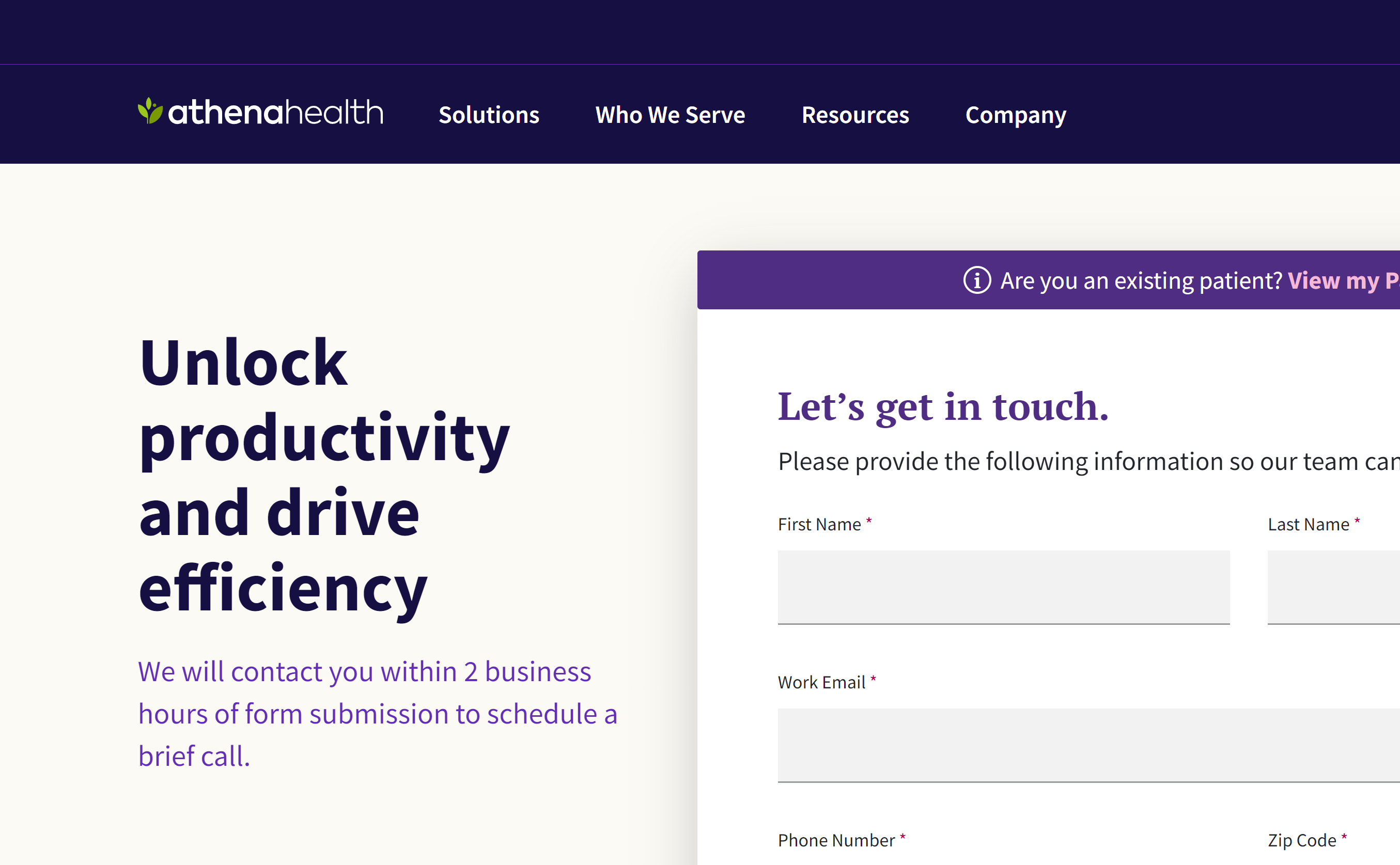
Visit Athenahealth’s website and click LET’S CONNECT. Fill out the form with your practice details so the team can reach out and walk you through setup.
2. Consultation and needs assessment
An Athenahealth representative will review your practice size, staffing, specialty, and workflow needs. This helps them match you with the right tools, including EHR, practice management, and billing solutions.
3. Review pricing and contract terms
You will receive a service proposal with pricing, features, and contract requirements. Make sure all decision makers understand what is included, especially support, training, and revenue cycle options.
4. Submit practice information
Athenahealth will request essential details, including provider NPI numbers, practice contacts, billing information, and technical requirements. Accurate information speeds up onboarding.
5. Training and onboarding
Depending on the products you choose, your team will go through guided training to learn how to use AthenaNet, AthenaOne, and all integrated tools. This ensures smooth adoption and fewer login issues later.
6. Receive your Athena provider login credentials
Once onboarding is complete, Athenahealth issues each user a username and password. These credentials allow providers, staff, and administrators to access AthenaNet and the AthenaOne mobile app.
7. Log in and start using Athenahealth
With your credentials ready, you can sign in through the official Athena provider login page and begin managing patient charts, schedules, billing tasks, and clinical workflows.
To help new practices get started, Athenahealth may offer onboarding through its coaching platform, which guides teams through setup and workflow basics. Once your account is active, you can begin using features such as EHR management, scheduling tools, and outsourced medical billing to streamline daily operations.
How to complete the Athena provider login (step by step)
Signing in to your Athena provider account is simple once you have your AthenaNet credentials. Follow the steps below to access the official Athena provider login page and log in to your workspace.
1. Go to the AthenaNet provider login page
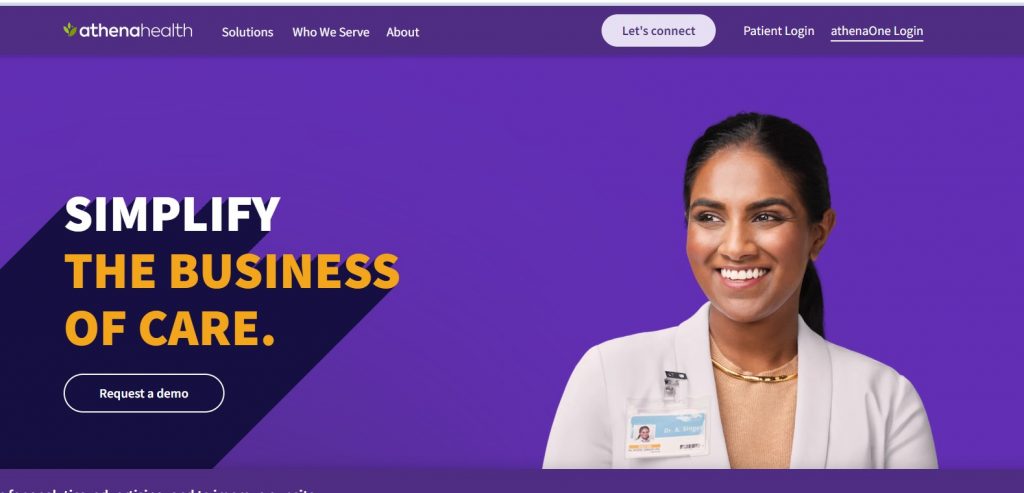
Open your browser and visit the official Athenahealth site. From the top right corner, select AthenaOne Login to access the provider portal.
2. Enter your username and password
Type in the login credentials your practice administrator or onboarding team assigned to you. These details give you access to charts, schedules, billing tools, and all provider features.
3. Complete multi-factor authentication (if required)
Some organizations enable extra security checks. If prompted, enter the verification code sent to your email or mobile device before continuing.
4. Click “Log In” to access your dashboard
Once authentication is complete, you’ll enter the AthenaNet dashboard, where providers manage clinical tasks, documentation, patient communication, and daily workflows.
5. If your login fails, use the recovery tools
Athenahealth offers built-in recovery options.
You can reset your username or password directly from the login screen or contact your organization’s administrator for credential updates.
Common Athena provider login issues and quick fixes
Most login issues in AthenaNet and AthenaOne come from expired credentials, MFA delays, or browser conflicts. These fixes resolve most errors quickly.
Reset your password from the AthenaNet login screen or ask your administrator to issue updated credentials.
Clear your browser cache, try a private window, or disable your VPN. Network firewalls often block the page.
Make sure your device time is correct and your email or SMS filters aren’t blocking verification codes.
Too many failed attempts trigger a lockout. Use the recovery link or ask your administrator to unlock your account.
Clear the app cache or reinstall. AthenaOne uses the same credentials as desktop, so MFA resets often solve mobile login issues.
How to access the Athenahealth patient login portal
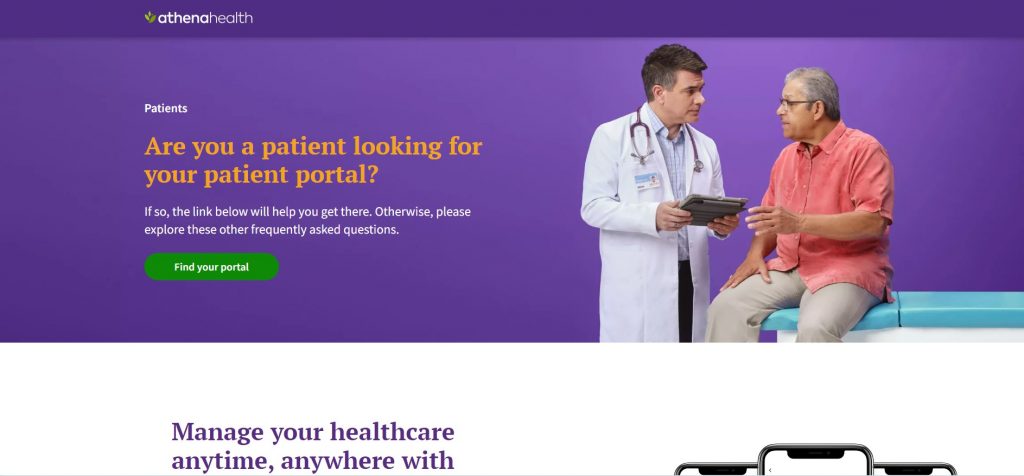
Patients use a separate portal from providers. The Athenahealth patient login page allows users to view lab results, check upcoming appointments, send messages, and securely manage medical records. Here’s how to sign in:
1. Go to the official patient portal
Open your browser and visit the Athenahealth Patient Portal link provided by your healthcare provider. Each practice uses its own secure login URL.
2. Enter your username and password
Type in the credentials you created during your patient portal enrollment. Your clinic can resend these details if you did not receive them.
3. Complete any identity verification
Some practices require a one-time code sent to your phone or email before access is granted.
4. Access your patient dashboard
Once logged in, you can review lab results, request prescription refills, send provider messages, check past visit summaries, and manage billing information.
If you can’t sign in
Patients can reset their username or password directly from the login page or contact their provider’s support team for account recovery.
How to use the AthenaOne mobile app
The AthenaOne mobile app gives providers secure, on-the-go access to their Athenahealth tools. With the app, you can review schedules, update charts, check patient information, and manage clinical tasks from your phone.
Key features of the AthenaOne app
- View and edit patient charts
- Check your schedule and upcoming appointments
- Document visits using mobile-friendly tools
- Send and receive provider messages
- Manage clinical tasks and notifications
- Access patient information securely from anywhere
How to log in using the mobile app
- Download AthenaOne from the App Store or Google Play.
- Open the app and enter the same username and password you use for your Athena provider login.
- Complete any multi-factor authentication required by your organization.
- Once logged in, you can navigate to charts, tasks, and schedules directly from your mobile dashboard.
Athenahealth data security and HIPAA compliance
Athenahealth builds its platform on strict data security standards, so providers can access patient information without worrying about privacy or compliance. Every login session, whether through AthenaNet or the AthenaOne mobile app, is encrypted end to end. This protects sensitive details such as patient charts, billing data, and clinical notes from unauthorized access.
The system meets HIPAA and HITECH requirements and uses tools like multi-factor authentication, automated session timeouts, and continuous monitoring to keep accounts secure. These safeguards fully cover providers who sign in through the Athena provider login, and administrators can enable stricter rules if their organization requires it.
Athenahealth also maintains a secure cloud environment, running frequent audits and system checks to ensure nothing slips through the cracks. The goal is simple: give you fast access to what you need while keeping every piece of patient data protected.
Benefits of using Athenahealth
Athenahealth gives providers a connected workspace where scheduling, clinical documentation, billing, and patient communication all run through one system. The EHR is designed to support specialty workflows as well, and many practices extend its capabilities with tools such as Oncology EHR, which makes it easier to manage complex treatment plans and specialty-specific documentation.
The platform also works well with teams focused on EHR software development, enabling practices to build or customize features that align with their workflows. For day-to-day operations, Athenahealth integrates seamlessly with the best care management software, helping providers streamline patient outreach, reduce no-shows, and improve communication across the care team.
Administrators benefit from built-in analytics and reporting tools that provide a clear view of performance trends, workload patterns, and financial outcomes. These insights support stronger decision-making and play a role in doctor reputation management, helping practices monitor patient experience and quality measures more effectively. These systems streamline records retrieval, improving patient care coordination and reducing paperwork.
Athenahealth’s cloud environment also supports performance improvements such as CPU optimization, which helps the system run smoothly during busy hours. And when clinics need deeper integrations or custom-built features, working with a custom EHR software developer enables them to tailor Athenahealth to their unique clinical or administrative needs.
Altogether, the system helps providers move faster, reduce errors, and maintain a more organized clinical workflow without relying on heavy in-house IT infrastructure.
Key advantages of using Athenahealth
Athenahealth brings together scheduling, billing, EHR, and patient communication in one cloud-based system. Below are the core advantages that make it a strong choice for busy healthcare practices.
Unified workflow
One login gives providers access to charts, schedules, billing tools, and communication features without switching systems.
Better patient engagement
Tools for messaging, reminders, and online records improve communication and make life easier for patients.
Data-driven decisions
Built-in analytics help practices track performance, understand trends, and make smarter operational choices.
Cloud-based reliability
No servers or heavy IT maintenance required; providers can access their workspace from anywhere with an internet connection.
Final thoughts on the Athena provider login
The Athena provider login is the main entry point to everything your practice does inside Athenahealth. Once you sign in, the system brings your schedules, patient records, billing tools, and communication features into one place so you can work without switching between platforms. Whether you access AthenaNet from a desktop or the AthenaOne app on your phone, the goal is the same: faster workflows, fewer errors, and a smoother experience for both providers and patients.
As long as your account is set up correctly and you follow your organization’s security requirements, the login process stays simple. With time, your team becomes more comfortable navigating the platform, updating charts, reviewing tasks, and managing the day’s work from a single dashboard. When everything runs through a unified login, productivity improves and the whole practice benefits.
How do I reset my Athena provider login password?
Go to the AthenaNet login page and select “Forgot password.” Enter your username and follow the verification steps.
If your organization manages your credentials, you may need to contact your administrator to reset it for you.
Why can’t I access the Athena provider login page?
This usually happens because of browser issues, expired sessions, VPN restrictions, or cached data.
Try clearing your cache, switching browsers, or using a private window. If the page still won’t load, your network may be blocking access.
What should I do if multi-factor authentication isn’t working?
Make sure your device time is correct and that you can receive SMS or email codes.
If codes still fail, your administrator can reset your MFA method or enable an alternate verification option.
Is the provider login the same as the Athenahealth patient portal?
No. Providers use AthenaNet or the AthenaOne app to access clinical and administrative tools.
Patients use a separate portal to view lab results, appointments, messages, and billing information.
Can I use the Athena provider login on my phone?
Yes. Providers can sign in using the AthenaOne mobile app with the same username and password they use on desktop.
Some organizations may require an extra verification step when logging in from a new device.
What if my AthenaNet account is locked?
Accounts lock after multiple failed attempts. Use the recovery option on the login page to reset your credentials.
If recovery doesn’t work, your administrator can unlock the account or issue updated login details.

Andrej Fedek is the creator and the one-person owner of two blogs: InterCool Studio and CareersMomentum. As an experienced marketer, he is driven by turning leads into customers with White Hat SEO techniques. Besides being a boss, he is a real team player with a great sense of equality.