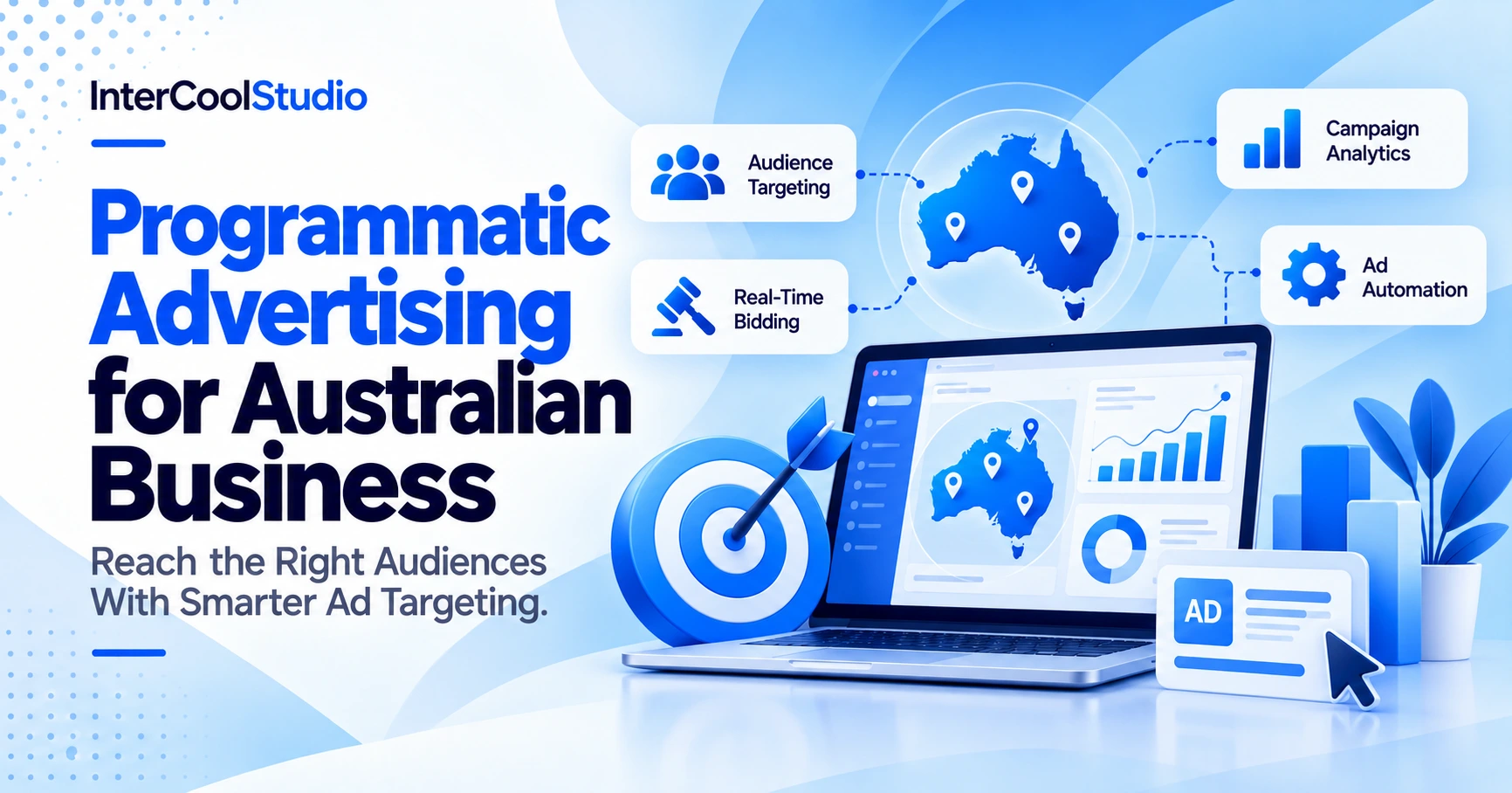
Digital advertising has become central to how Australian businesses win customers, build their brands, and hold their own in markets that seem to grow more crowded every year. A café in Newtown, a plumbing business in Parramatta and a national homewares chain are all competing for the same few seconds of attention on the same phone screens. Reaching the right people at the right moment takes far more than scattering ads across a few popular websites and hoping for the best. Businesses need an approach that brings together relevant audience data, efficient media buying and steady, honest measurement. Programmatic advertising answers that need by using automated technology to buy and place digital ads.
Instead of relying entirely on phone calls, emails and lengthy negotiations with publishers, advertisers use software platforms that make buying decisions based on campaign goals, audience characteristics and the advertising space available at any given moment. The haggling still happens. It just happens in a fraction of a second, without anyone needing to pick up a phone.
The approach can work for businesses of very different sizes, from a local retailer looking for customers in one city to a national organisation speaking to several groups of customers at once. Handled carefully, programmatic advertising makes digital advertising more measurable, more flexible, and much quicker to adapt when the market shifts. Handled carelessly, it’s just a faster way to spend money.
Programmatic advertising helps Australian businesses reach relevant audiences through automated ad buying, real-time bidding, and data-driven targeting. It supports more efficient campaign management across websites, mobile apps, and other digital channels. Businesses can refine audience segments, adjust budgets, and track performance through metrics such as conversions, acquisition costs, and return on ad spend. Effective results depend on reliable data, suitable placements, strong creative content, and responsible privacy practices.
How Programmatic Advertising Works
Programmatic advertising links advertisers, publishers and technology platforms through an automated buying process. Advertisers set their campaign goals, budgets, targeting rules and creative requirements, while publishers offer up advertising space across websites, mobile apps and other digital spaces. It’s a bit like a busy marketplace where every stall is open around the clock and every price is agreed before the shopper has even noticed the sign.
A demand-side platform (DSP) lets advertisers, or their agencies, weigh up available advertising opportunities and bid on the ones that suit them. Publishers may use supply-side platforms (SSPs) to manage and sell their advertising space. These systems work together through advertising exchanges and other marketplace arrangements, quietly matching buyers and sellers millions of times a day.
The Role of Real-Time Bidding
Real-time bidding is one of the best-known ways of buying ads programmatically. When someone opens a webpage or app that has an available ad space, an auction may take place in milliseconds, far faster than the blink of an eye. A commuter scrolling the morning news on a Melbourne train at 7:40 has no idea that several advertisers just competed for their attention before the headline had even finished loading.
The publisher’s system sends that advertising opportunity out to the marketplace. Eligible advertisers check it against their campaign settings, including the likely audience, how suitable the placement is and the most they’re prepared to pay. Competing bids are compared, and the winning ad is chosen according to the auction’s rules. Nobody raises a paddle. The software does all the bidding.
The ad then appears as the page or app loads. This lets advertisers make individual buying decisions at an enormous scale, instead of buying every single placement in advance and hoping it reaches the right people. Each impression is judged on its own merits.
Not all programmatic advertising runs through open real-time auctions, though. Private marketplaces, preferred deals and programmatic guaranteed arrangements give advertisers and publishers other ways to do business, often with more certainty about where ads will appear. For some brands, that certainty is worth paying a little more for.
Audience Targeting and Segmentation
One of the biggest strengths of programmatic advertising is its ability to choose advertising opportunities based on clearly defined audiences. Rather than showing the same message to everyone, businesses can sort potential customers into groups that reflect their interests, their needs or their relationship with the brand. A first-time visitor and a loyal customer of ten years rarely need to hear the same thing.
Behavioural and Contextual Targeting
Behavioural targeting uses permitted information about online activity or interests to find audiences that may suit a campaign. A sporting goods retailer, for example, might aim to reach people who’ve shown an interest in hiking, camping or weekend trail runs, subject to the available data, platform policies and the relevant privacy requirements. It’s targeting with rules attached, and those rules matter.
Contextual targeting takes a different route, looking at the content surrounding an ad rather than the person reading it. A business selling home improvement products could appear beside articles about kitchen renovations or deck building, reaching readers who are already in the right frame of mind without leaning on their personal browsing history. Someone reading about how to retile a bathroom on a Sunday afternoon is a natural fit for an ad about grout and tiles.
Geographic targeting is especially useful in a country as big as Australia. A restaurant, a tradesperson or a regional tourism operator in Queensland may want to focus on people in particular suburbs, cities or travel markets. There’s little value in a Hobart bakery paying to reach people in Darwin. Demographic and first-party audience segments can add further options, as long as the data behind them is reliable and its use is permitted.
Segmenting audiences lets businesses shape their creative messages for each group. A new customer might see a friendly introduction to the brand, while someone who browsed a product category last week could see more detail about it. These approaches work best when they stay proportionate, transparent and respectful of privacy, though. Most people have had the slightly unsettling experience of seeing an ad for a lawnmower follow them around the internet for a fortnight after they’d already bought one.
Programmatic Display Advertising Across Digital Channels
Programmatic display advertising places visual ads across participating websites, mobile apps and other supported digital spaces. Common formats include static banners, animated creatives, responsive display ads and selected video formats. A short, well-made animation can tell a story in the time it takes someone to scroll past.
The sheer amount of available inventory helps advertisers reach people at every stage of the customer journey. Someone hearing about a brand for the very first time may respond to a simple awareness message, while a person weighing up two similar products may be helped by an ad that explains features, availability or practical benefits. The right message at the wrong moment rarely lands.
Placement quality matters just as much as potential reach. Advertisers need to think about whether a website or app genuinely suits the campaign, whether ads are actually seen and whether the surrounding content fits the brand. A family-friendly brand appearing next to a distressing news story is the kind of mismatch nobody wants to explain to the boss. Frequency controls can also limit how often one person sees the same ad, which stops a clever campaign turning into an irritating one.
Professional support may help businesses set up sensible targeting, manage buying platforms and pull campaign reporting together. When assessing a programmatic ad agency, decision-makers can look closely at its approach to campaign strategy, transparency, brand safety and performance measurement before deciding whether outside help suits their needs. A good agency will happily explain how it works. A vague one deserves a few more questions.
Benefits for Australian Businesses
Programmatic advertising offers several practical advantages, although results always depend on campaign goals, audience quality, creative execution and how carefully the budget is managed. The technology opens doors. It doesn’t walk through them on anyone’s behalf.
More Efficient Media Buying
Automation removes the need to negotiate every individual placement by hand. Advertisers can run several campaigns at once and adjust their buying rules from one central platform, which helps marketing teams react far more quickly when performance changes. For a small team already juggling social posts, newsletters and a looming end-of-financial-year sale, that saved time matters.
Greater Audience Relevance
Targeting options let businesses focus their spending on audiences that match their products, locations or campaign goals. That can cut down on wasted impressions in unsuitable places, although targeting is only ever as accurate as the data behind it. Good data makes for good targeting. Patchy data makes for confident guesses.
Flexible Budget Management
Campaign budgets, bid limits and delivery settings can all be adjusted as results come in. A business might put more money behind placements that are working and pull back from segments that aren’t pulling their weight. Smaller businesses still need realistic budgets, though, because access to automated buying doesn’t automatically mean low costs or guaranteed profit. A flashy dashboard isn’t the same thing as a healthy bank balance.
Improved Measurement
Programmatic platforms can report impressions, clicks, costs and other delivery figures. When they’re properly connected to analytics and conversion tracking, they may also help businesses see enquiries, purchases and other actions that really matter. Knowing that ten thousand people saw an ad is interesting. Knowing that forty of them booked a service is far more useful.
Measuring and Optimising Campaign Performance
Good measurement starts with a clear goal. A campaign built to raise awareness isn’t fairly judged on immediate sales alone, while a campaign designed to bring in online enquiries needs measures that reflect the quality of those leads and how many turn into customers. Measuring the wrong thing can make a perfectly good campaign look like a failure.
Useful measures include click-through rate, cost per click, cost per acquisition, conversion rate and return on advertising spend. Viewability, reach and frequency can add valuable context for display campaigns. These figures tell the clearest story when they’re read together rather than one at a time. A low cost per click looks wonderful until it becomes clear that none of those clicks ever led anywhere.
Optimisation means reviewing results and making careful, controlled changes. Marketers may test different headlines, images, audience segments, bidding strategies or placements, one at a time, to see what genuinely makes a difference. They can also check whether the landing page offers a smooth experience once someone clicks. An eye-catching ad that sends people to a page that won’t load properly on a phone is like a lovely shopfront with a locked door.
Conversion tracking needs particular care. Incomplete tracking, duplicate events and differences between reporting systems can all distort the picture. Attribution models also affect how credit is shared when customers interact with several marketing channels before they finally buy. A customer who saw a display ad on Monday, searched the brand on Wednesday and bought on Friday after an email reminder doesn’t fit neatly into any single box.
Privacy-conscious measurement, accurate tagging and regular reporting help decision-makers understand what the data can genuinely show, and just as importantly, what it can’t. Honest numbers are more useful than flattering ones.
Integrating Programmatic Advertising With Other Marketing Channels
Programmatic advertising works best as part of a wider digital marketing strategy rather than on its own. Search advertising catches people who are actively looking for a product right now, while programmatic display can introduce a brand to relevant audiences or keep it front of mind while they’re still deciding. One meets demand. The other helps create it.
Search engine optimisation builds long-term visibility through organic search, and email marketing keeps in touch with customers who’ve chosen to hear from a business. Social media advertising can add audience insights, engagement and extra reach. When these channels work together, customers hear a consistent story wherever they meet the brand, whether that’s on a news site at breakfast or in their inbox after dinner.
Working together doesn’t mean every channel chases the same targets, though. Each channel needs a clear role, sensible performance measures and an obvious link to the wider business goal. Shared reporting can reveal overlapping audiences, messages that don’t quite match and chances to make the whole customer experience smoother. A brand that sounds playful on social media and stiffly formal in its display ads can leave customers wondering whether they’re dealing with the same company.
Privacy, Transparency and Brand Safety
Australian advertisers need to take their privacy obligations seriously whenever they collect, use or share personal information. Depending on the circumstances, the relevant requirements may include the Privacy Act 1988, the Australian Privacy Principles, consent arrangements and platform-specific policies. Customers trust businesses with their information, and that trust is far easier to lose than to rebuild.
It’s essential for businesses to understand where their audience data comes from, how it’s used and whether the right permissions are in place. Ad fraud, invalid traffic, unsuitable content and limited visibility into third-party supply chains all deserve attention too. Paying for clicks generated by bots at three in the morning is a frustrating way to spend a marketing budget.
Practical safeguards include reviewing placement reports, applying brand-safety exclusions, keeping watch for suspicious activity and asking technology providers or agencies to explain their fees and reporting methods clearly. Clear governance matters even more when several platforms or outside partners are involved in the same campaign. When everyone assumes someone else is checking, nobody usually is.
Conclusion
Programmatic advertising gives Australian businesses a flexible way to buy digital media, reach relevant audiences and judge how well their campaigns are performing. Automated bidding, audience segmentation and programmatic display advertising can make media buying far more precise, as long as they’re backed by sound data, strong creative work and clear goals.
In the end, its success depends on thoughtful planning far more than on automation alone. Businesses that keep an eye on meaningful results, respect privacy, protect their brand and connect programmatic campaigns with their other marketing channels are in a much stronger position to make smart advertising decisions and keep improving over time. The technology can find the right audience in milliseconds. Deciding what to say to them, and why, is still a very human job.
What is programmatic advertising and how does it work?
Programmatic advertising uses automated technology to purchase digital advertising space across websites, mobile apps, and other supported channels. Advertisers establish budgets, audience targeting rules, and campaign objectives, while software platforms evaluate available ad placements.
Some placements are purchased through real-time auctions, while others use private marketplaces or direct arrangements between advertisers and publishers.
What is the difference between programmatic advertising and real-time bidding?
Programmatic advertising describes the broader use of technology to automate digital media buying. Real-time bidding (RTB) is one method of programmatic buying in which advertising impressions are offered through automated auctions.
Not all programmatic advertising uses RTB. Advertisers can also purchase inventory through private marketplaces, preferred deals, and programmatic guaranteed agreements.
Is programmatic advertising suitable for small businesses in Australia?
Yes. Australian small businesses can use programmatic advertising to reach audiences based on location, relevant interests, or the content people are viewing. Local retailers, service providers, and tourism businesses may benefit from geographic and contextual targeting.
However, businesses should consider campaign budgets, platform or agency fees, creative costs, and conversion tracking before investing. Automated media buying does not guarantee profitable results.
How can businesses measure programmatic advertising performance?
Businesses can measure performance using impressions, click-through rate, cost per click, conversion rate, cost per acquisition, and return on advertising spend. Viewability, reach, and ad frequency also help assess display advertising campaigns.
The most useful metrics depend on the campaign objective. Businesses focused on generating sales should prioritise qualified conversions and acquisition costs rather than impressions or clicks alone.
What privacy risks should Australian businesses consider with programmatic advertising?
Programmatic advertising may involve collecting, sharing, or processing audience information. Businesses should understand how targeting data is obtained, whether appropriate permissions are in place, and which privacy obligations apply under Australian law.
Contextual targeting can reduce reliance on personal browsing information. Advertisers should also review their technology partners, data-sharing practices, placement transparency, and safeguards against invalid traffic.

Andrej Fedek is the creator and one-person owner of three blogs: InterCool Studio, CareersMomentum, and Bettegi. As an experienced marketer, he is driven by turning leads into customers with White Hat SEO techniques. Besides being a boss, he is a real team player with a great sense of equality.