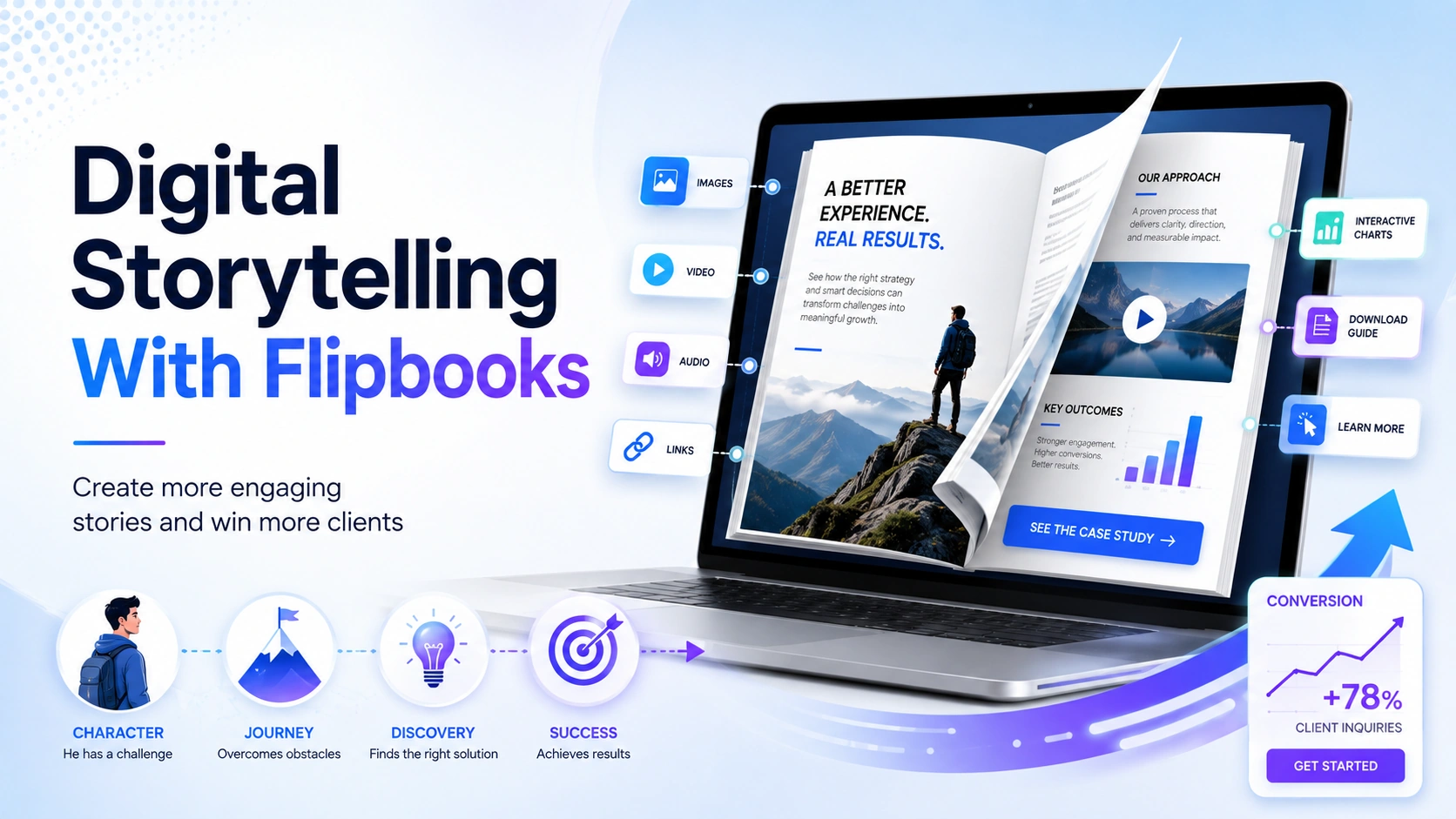
Digital storytelling gives marketers a stronger way to connect with audiences than polished visuals alone. By combining a clear narrative with emotion and interactive content, brands can create experiences that feel more memorable and relevant.
Flipbooks are a popular tool for achieving just that. You can mix interactive content with multimedia and engaging stories. This creates an immersive experience that turns prospects into loyal customers.
Here’s how to master the art of digital storytelling using flipbooks.
But first…
Flipbooks turn static content into interactive stories by combining visuals, video, audio, links, and other engagement features. They can help businesses hold attention longer, strengthen brand recall, and guide prospects toward a clear next step. Built-in analytics also make it easier to see which pages, media, and interactive elements drive the strongest response.
Why Digital Storytelling Matters for Business
When we talk about digital storytelling, we’re not just referring to creating pretty pages; we’re tapping into the core of human emotions. Crafting emotional stories helps your brand stand out from the crowd.
Rather than bombarding potential clients with statistics and specs, you use narrative structures:
- Character: Introduce someone your audience can root for. This can be a persona, client, or business owner.
- Conflict: Point out a common challenge your audience faces, like tight budgets or weight concerns.
- Resolution: Demonstrate how your interactive flipbook features solve your audience’s problems.
For example, a fitness app, like Strava (shown below), might share a real user’s journey from injury to marathon completion. It might also include personal experiences and challenges. This personal touch transforms facts into experiences that the target audience can relate to.
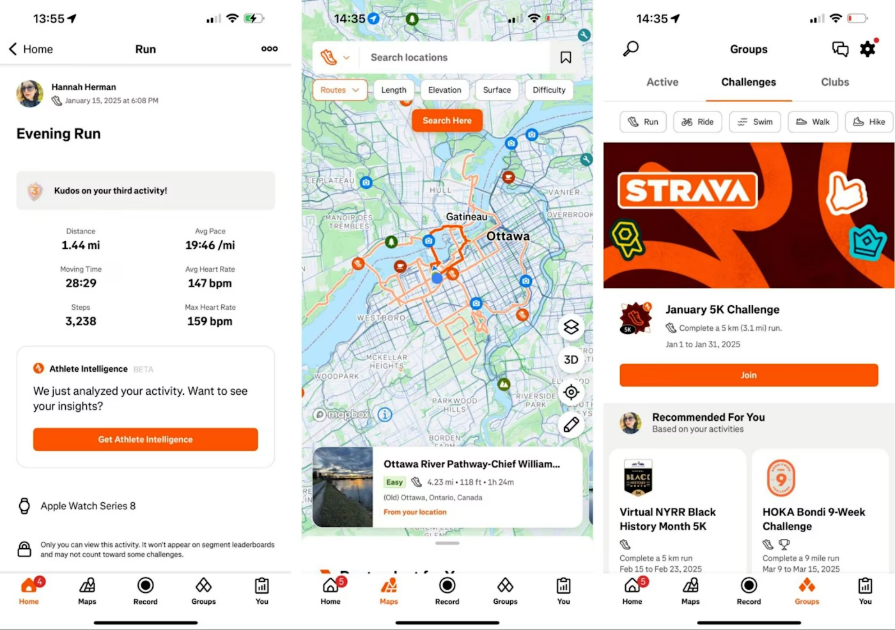
Screenshot provided by the author
In fact, Dr. Jennifer Aaker, an American behavioral scientist at Stanford Graduate School of Business, notes that people remember stories up to 22 times more than statistics or facts.
Flipbooks: Your Go-To Digital Storytelling Platform
If you want to give digital storytelling a try, interactive flipbooks offer various features, including:
- Page-flip animation: The feel of turning pages creates a magazine-like experience that immediately draws readers in.
- Embedded links: To boost traffic, add clickable elements that point users to your website, landing pages, or social media platforms.
- Audio files and voiceovers: Add narration or mood-setting music right alongside your visuals. Imagine a travel agency flipbook where a soft ocean soundscape fades in as the pages turn.
- Embedded images and videos: Modern flipbook platforms let you upload images, videos, and interactive media directly into your publication. These can be useful if you want to mix in case studies, customer testimonials, and quick product demos.
- Tool integrations: For sales representatives, many flipbook platforms support integrations with automation tools like Zapier, making it easier to distribute and track content. When you create a new flipbook, Zapier notifies your contacts and shares it on your Facebook page.
6 Ways Flipbooks Improve Digital Storytelling for Businesses
Unlike static PDFs, flipbooks are an interactive and fun way to engage your audience. Research by Mediafly shows that interactive content is likely to generate nearly 53% more engagement than static content.
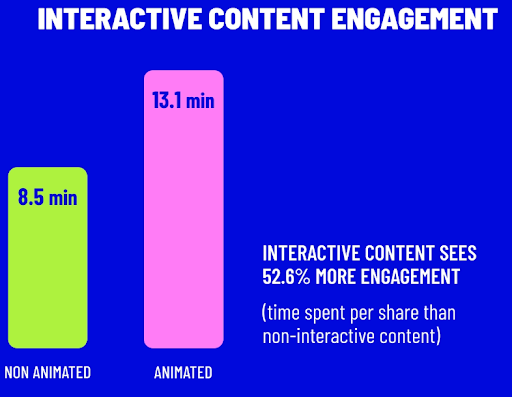
Here’s why businesses are increasingly using flipbook software for digital storytelling:
1. All-in-one convenience
Unlike Adobe Spark or Adobe Express, where you often have to export from one tool and upload to another, flipbooks bring everything under one roof. No more wrestling with file formats or broken embeds.
2. Scalability for content teams
Whether you’re a solo marketer or a 10-person content squad, you can spin up new flipbooks in minutes, reuse templates, and collaborate in real time. That speed translates directly into faster campaign launches.
Fast content production matters because audiences now expect more personalized and visually engaging experiences across multiple channels.
According to HubSpot research, 91% of consumers prefer interactive and visual content over traditional static formats, making multimedia storytelling increasingly important for modern marketing campaigns.
Flipbooks help marketing teams maintain consistency while repurposing the same narrative across presentations, lead magnets, proposals, and sales collateral.
Consistently delivering professional and engaging sales materials is a proven strategy for scaling a profitable B2B business.
3. No coding experience
You don’t need to be a coding expert. Most modern flipbook platforms include advanced features such as analytics and embedded media without requiring any coding knowledge.
4. Consistent branding
You can control every aspect of your brand’s look, from fonts to color overlays. This means that your flipbook will align perfectly with your brand guidelines.
5. Built-in engagement metrics
Track how many readers click your links, watch your videos, or share your flipbook. These insights feed directly into your performance with analytics, letting you tweak your digital storytelling strategies on the go.
6. Device accessibility
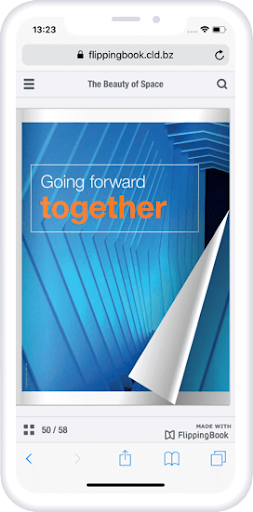
No matter whether your audience views your flipbook on a desktop, tablet, or smartphone, the experience should remain seamless. Flipbooks can adjust, so no pinching or zooming is required.
Digital Storytelling Strategies and Best Practices
When it comes to creating flipbooks that truly resonate, having a clear strategy is as important as the content itself. Below are four digital storytelling strategies to help your flipbooks stand out, and why they work.
1. Narrative structures
Every great story follows this structure:
- A beginning that hooks your reader
- A tension-filled middle that keeps users turning pages
- And an end that delivers your message with a call-to-action (CTA)
You might introduce your story with a bold statistic or striking image in a flipbook. You might also outline a common pain point and showcase how your solution resolves it.
2. Personal experiences
Sharing personal stories or historical facts humanizes your brand. So knowing how to connect with your audience is key here. Make sure the experiences you share are relevant and related to your niche.
As you can see, through personal experiences, you can build trust and show real-world impact, rather than just listing features.
3. User-generated content
Nothing breeds authenticity like content created by your own audience. Invite customers to submit photos, short clips, or quotes you can embed as multimedia story elements. An online retailer, for instance, could showcase a user’s Instagram reel promoting their new mascara products in their flipbook.
This type of content boosts engagement and makes readers feel like active participants in your brand’s story.
4. Creative storytelling
Branch out from linear narratives with choose-your-own-adventure paths or interactive decision points. For example, a financial services firm might present two scenarios—“Invest in X” vs “Invest in Y” and let readers click through to see tailored outcomes.
This creative storytelling approach transforms passive readers into active explorers, deepening emotional connections and reinforcing your flipbook’s power as a tool.
How To Build Compelling Narratives With Flipbooks
With flipbooks, you invite your audience to become active participants in your brand’s story. To turn every page into a moment of engagement, focus on these:
Open with a visual hook
Lead with an image or brief animation that immediately captures attention. Set the tone. This is where you use color overlays, typography, and background audio to establish the emotional landscape.
Add visual elements
Don’t rely just on text. Add audio files, videos, and high-quality images to create a multimedia story. This will attract different preferences.
Embed interactive elements
To make your content interactive, use:
- Clickable elements: Turn product images or case study callouts into portals where readers can dig deeper.
- Polls and quizzes: Gauge opinions or test knowledge. When someone clicks “What’s your style?”, they’re no longer a passive viewer but an engaged participant.
- Branching paths: Let viewers choose their personalized path — “Learn more about Feature A” vs “See Feature B in action”.
Conclude with a clear CTA
Guide readers to the next step. Whether it’s “Book a Demo,” “Download the Guide,” or “Subscribe for Updates,” make your CTA bold and unmissable.
Tie your CTA back to the resolution of your narrative—show how taking action leads to the happy ending your reader craves.
Creating engaging stories is only part of the process. To improve future campaigns, businesses must understand how audiences engage with their content. They should identify which storytelling elements boost engagement the most.
Measuring Success With Built-In Analytics
Understanding how readers interact with your flipbooks should be driven by data, not guesswork. It’s all about the data. Many flipbook tools now include analytics dashboards that track reader engagement and interaction patterns.
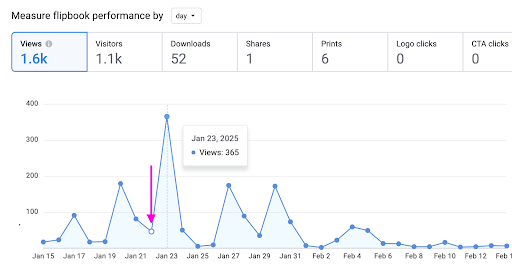
With our built-in digital storytelling tools, you can:
Track page views and time spent per page
See which pages captivate your audience the longest. If users stay on a particular slide with an embedded video or multimedia element for 30% longer, you know your multimedia storytelling tactics are working.
Monitor clicks on interactive elements
Identify hotspots. Many flipbook platforms can track clicks on embedded links, quizzes, and forms, helping businesses understand which interactive elements drive the most engagement and conversions.
Measure performance expectancy against benchmarks
Compare your current flipbook campaigns to past ones. Are your key metrics, like click-through rate and completion rate, improving every month? Built-in analytics tools help you track campaign performance and see improvements over time.
Analyze shares and downloads, and geolocation
Understand how widely your digital content spreads. Are readers sharing it on social or via email? Geolocation data shows which areas are most interesting. This helps you adjust your digital marketing strategies for each market.
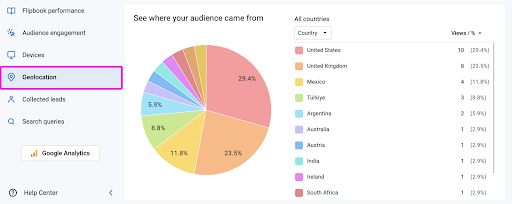
Identify drop-off points and optimize flow
Pinpoint where readers stop or skip ahead. If you see a sharp decline after page number X, you might need to rethink that section’s narrative structure or swap in more compelling stories to keep engagement high.
Bring Your Story To Life Today
Flipbooks offer digital marketing teams a popular tool to create emotional content that resonates. Focus on the key elements of storytelling, such as the visual stories, interactive elements, and narratives. And, you’ll foster genuine connections and boost your return on investment (ROI).
As audiences become more selective about the content they engage with, businesses need formats that combine storytelling, interaction, and accessibility. Flipbooks close the gap by transforming static information into engaging experiences. This boosts deeper engagement and strengthens brand recall.
If you want to create more interactive and visually engaging digital publications for your audience, platforms like Intercool Studio can help you design, publish, and share professional flipbooks more efficiently. Sign up with Intercool Studio to get started.
What is digital storytelling for business?
Digital storytelling uses narrative, visuals, multimedia, and interactive elements to communicate a brand message in a more engaging way.
Instead of relying only on statistics or product features, businesses can build stories around a character, a problem, and a resolution that audiences can relate to.
How can flipbooks improve digital storytelling?
Flipbooks turn static content into an interactive experience by combining page-flip effects with images, video, audio, links, and other multimedia elements.
This gives businesses more ways to hold attention, present information visually, and guide readers toward a specific action.
What interactive elements can you add to a flipbook?
Flipbooks can include clickable links, images, videos, audio, voiceovers, quizzes, polls, forms, and branching paths.
These elements encourage readers to interact with the content rather than simply scroll through or read a static document.
How do you create an effective story with a flipbook?
Start with a strong visual hook, introduce a clear problem or tension, and use multimedia elements to move the story forward.
Finish with a clear call to action that connects naturally to the resolution of the story, such as booking a demo, downloading a guide, or visiting a product page.
How can businesses measure flipbook engagement?
Many flipbook platforms provide analytics for page views, time spent per page, link clicks, shares, downloads, and other reader interactions.
Businesses can also identify drop-off points and compare campaign performance over time to see which parts of a story generate the strongest engagement.

Kristina is a content writer and editor at uSERP, with a passion for building long-lasting relationships with B2B and B2C clients through content and SEO efforts. Her work has appeared in Medical News Today, Healthline, and GetYourGuide, and when she’s not working, she’s either at a café or exploring new places with her husband. Connect with her on LinkedIn.