
Startups run lean, and founders rarely have enough hours in the day to do everything themselves. Good virtual assistant services take recurring admin, sales, and operational work off your plate so you can focus on building the business.
The challenge is that virtual assistant providers vary widely in model, talent, and price. This listicle breaks down five of the best options for startups in 2026, with every detail drawn from each company’s own website.
Key Takeaways
- Wing Assistant offers fully managed, dedicated virtual assistants with a proprietary workspace app.
- BELAY matches leaders with vetted, U.S.-based assistants for admin and financial support.
- MyOutDesk is one of the longest-running providers, with rigorous vetting and broad industry coverage.
- Time etc uses a flexible, pay-for-what-you-use model with experienced U.S.-based assistants.
- Prialto delivers a team-backed managed service built for continuity and proactive support.
The best virtual assistant services for startups in 2026 are providers that remove recurring admin, sales, customer support, marketing, and operational work without forcing founders to hire full-time staff too early. This guide compares Wing Assistant, BELAY, MyOutDesk, Time etc, and Prialto based on their service model, assistant location, onboarding style, management support, flexibility, security, and startup fit. Wing and Prialto stand out for managed support and continuity, BELAY and Time etc appeal to startups that prefer U.S.-based assistants, and MyOutDesk offers a long-running, heavily vetted option for companies that need broad operational coverage.
1. Wing Assistant
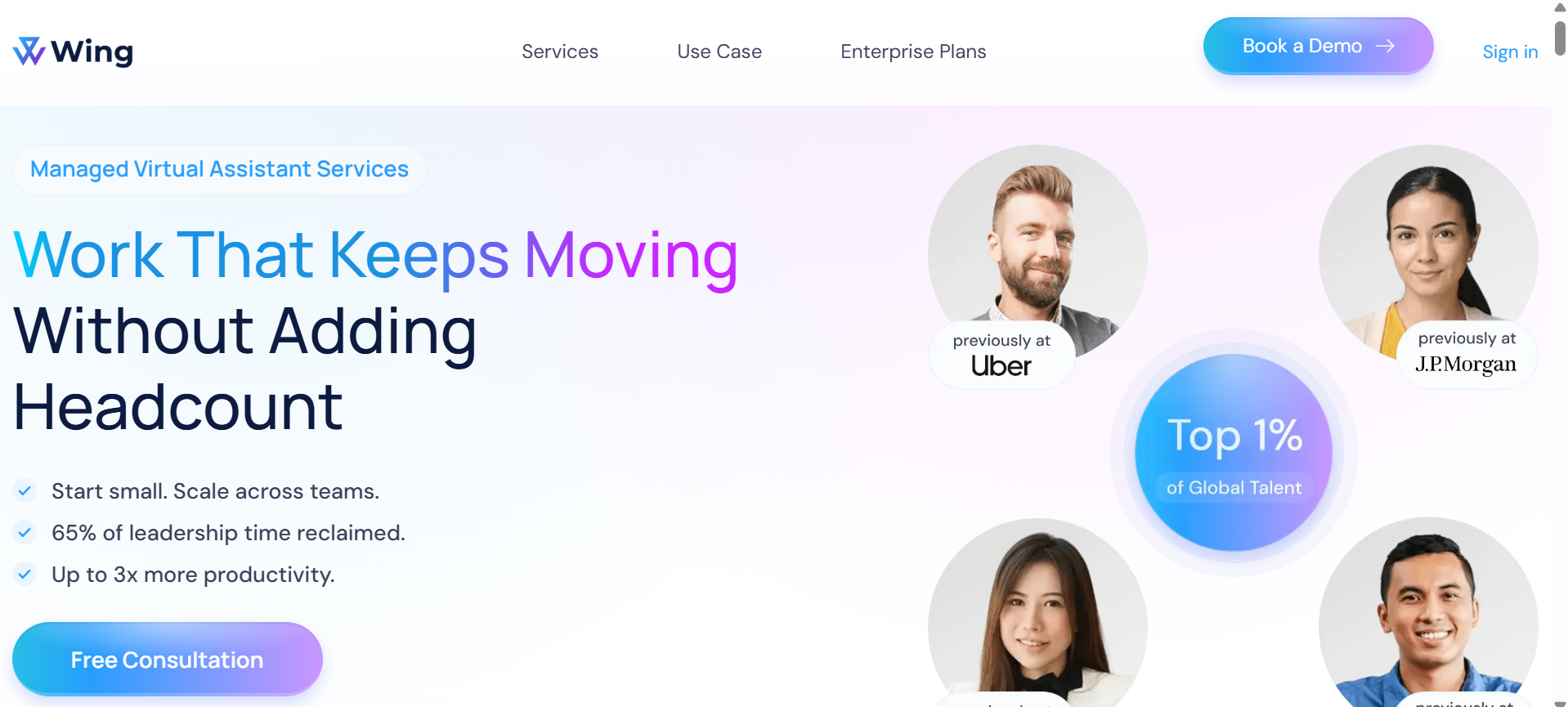
Wing Assistant is a managed virtual assistant service headquartered in Berkeley, California. It provides dedicated, remote assistant across business functions, with recruitment, training, supervision, and continuity coverage built in.
For startups, the appeal is that Wing handles the entire process rather than just placing a name. The company describes its model as managed execution for teams that have outgrown freelancers but do not want the hassle of hiring or micromanaging, so founders avoid that burden themselves.
Assistants are integrated into your tools and workflows so that execution is operational from day one.
That means the work is owned and accountable from the start, rather than depending on any single individual.
The range of roles is broad and easy to scale as a young company grows. Wing offers general virtual assistance, executive and personal assistance, customer service, sales development, digital marketing, and bookkeeping, with more than 25 roles and industry packages for sectors like healthcare and real estate.
A key differentiator is the Wing Workspace App, included in its plans at no extra cost. The company runs execution through this centralised, human and AI-powered workspace, with real-time task visibility, documented workflows, and structured handoffs built to keep work moving around the clock.
Wing also leans on structure to keep quality high across every engagement. Each plan includes rigorous quality control and supervision, centralised performance management, and a free replacement if an assistant is not the right fit.
The model is positioned as a cost-efficient alternative to traditional hiring. Wing states it provides managed operational support at a lower cost than hiring full-time employees, without adding payroll complexity or long-term employment risk, through flexible monthly plans with a dedicated customer success manager included.
2. BELAY
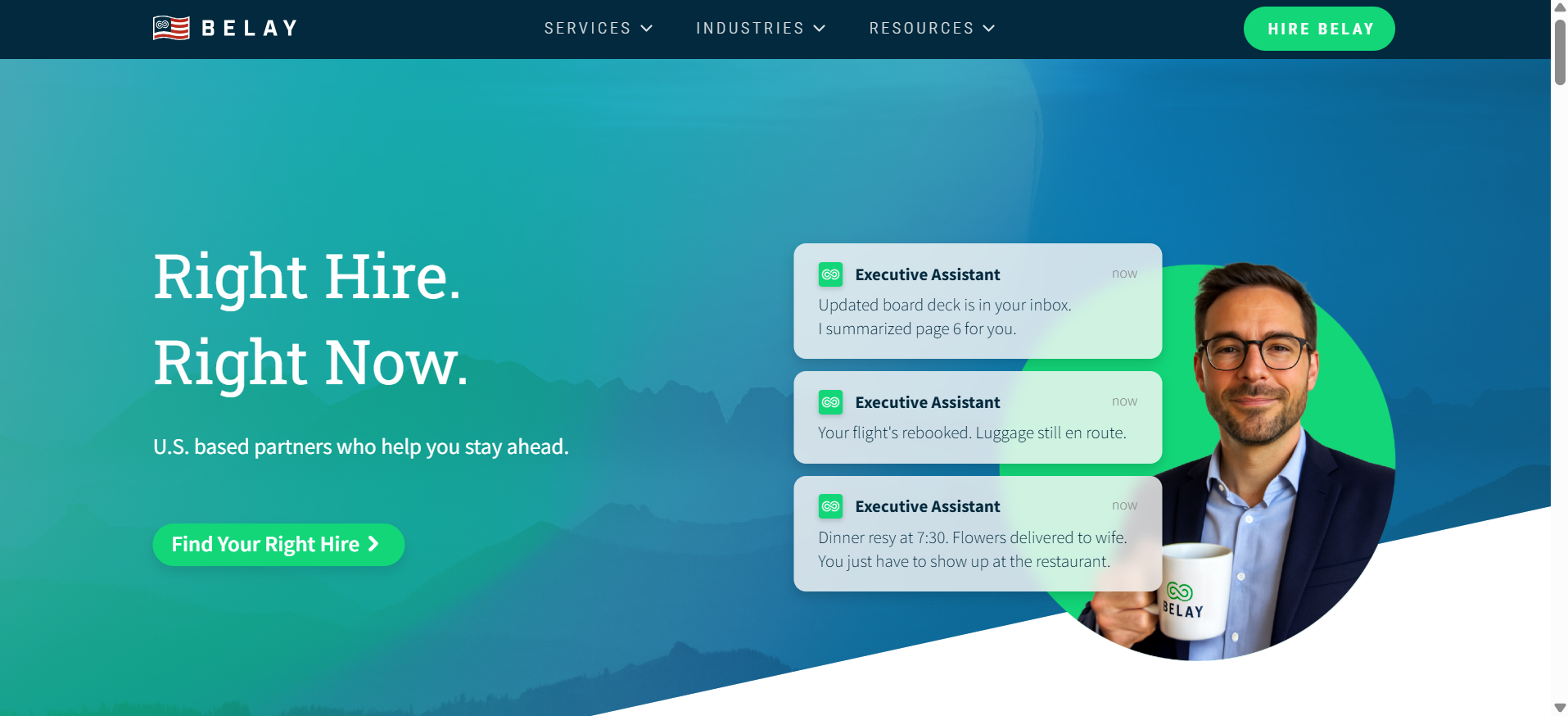
BELAY is a U.S.-based provider that matches leaders with vetted remote professionals across assistant and financial solutions.
Its assistants are all based in the United States, with the company emphasising real expertise enhanced by AI and automation rather than replaced by it.
For startups that prefer domestic talent, BELAY’s model is built around careful matching. The company says it has matched over 25,000 leaders across more than 50 industries, with a 93 percent first-match success rate and a free rematch if the fit is not right.
The service covers a wide range of roles beyond general admin. BELAY offers Executive Assistants, Marketing Assistants, Operations Assistants, Personal Assistants, Social Media Managers, and Virtual Assistants, plus financial solutions like bookkeeping, payroll, and tax services.
Onboarding is guided and personal rather than self-serve. Each client is paired with a Client Success Consultant who manages onboarding and stays available through ongoing check-ins, and most clients are matched in as little as one week.
Pricing is based on scope and level of support, with a flat monthly fee and no long-term lock-in. BELAY positions this as professional support at a lower cost than a full-time in-house hire, without the overhead of benefits, office space, or equipment.
3. MyOutDesk
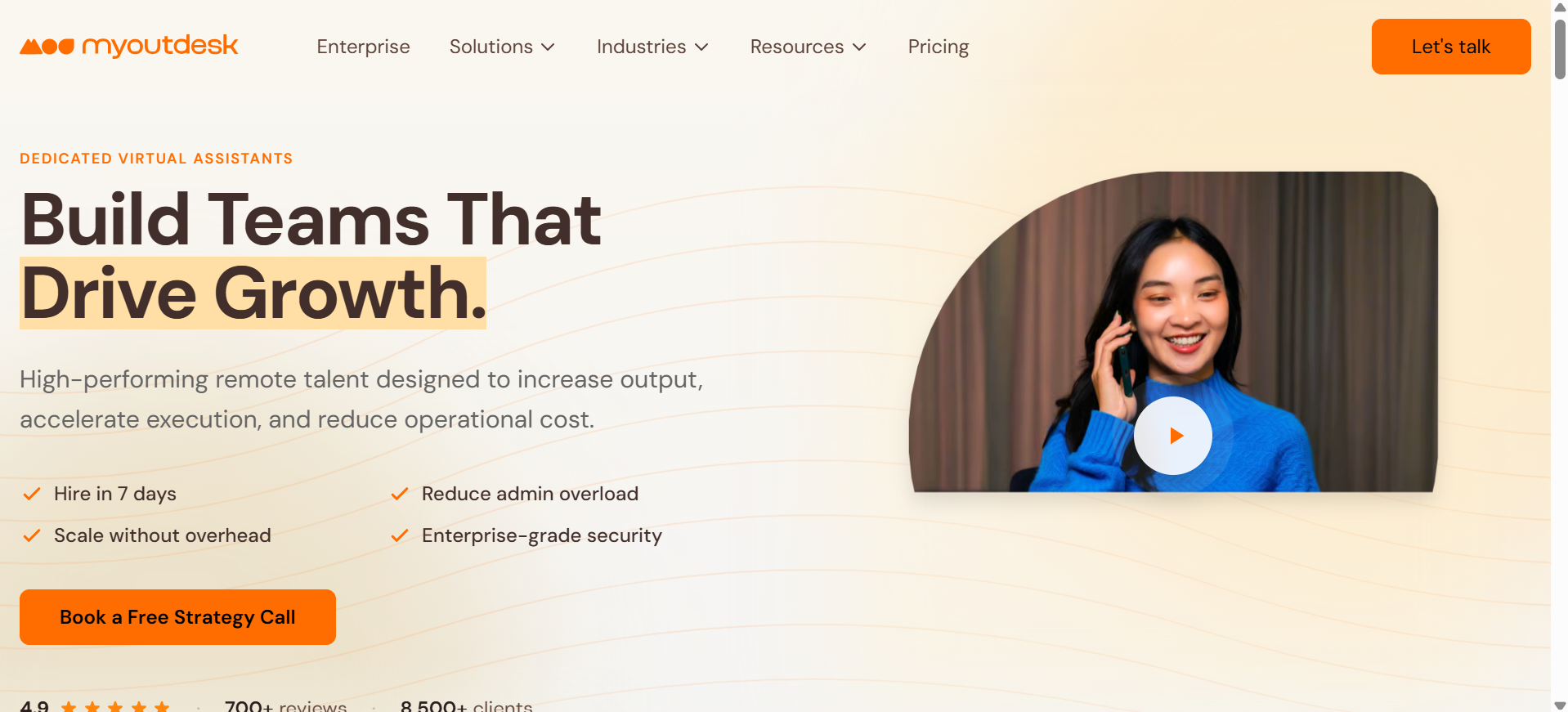
MyOutDesk was founded in 2008 and is one of the longest-running virtual assistant companies in the category.
According to its site, it has served more than 8,500 clients and reports figures like 140 million dollars in client savings and a 93 percent client retention rate.
The company is known for rigorous talent screening, which matters when trusting an assistant with key systems. MyOutDesk says it screens more than 125,000 applicants annually and accepts only the top 0.7 percent, with criminal, identity, and credential checks before onboarding.
Its services span the functions most startups need to delegate. MyOutDesk provides administrative, sales, customer service, marketing, and bookkeeping support, along with niche roles backed by domain knowledge across industries like real estate, healthcare, and e-commerce.
Security is a notable strength for founders handling sensitive data. The company highlights a framework that includes SOC 2 certified operations and hardened devices, built for highly regulated industries.
The cost advantage is in line with the wider managed-service market. MyOutDesk says clients can save up to 70 percent in employment costs compared to traditional in-house hiring, with dedicated professionals rather than freelancers or gig workers.
4. Time etc
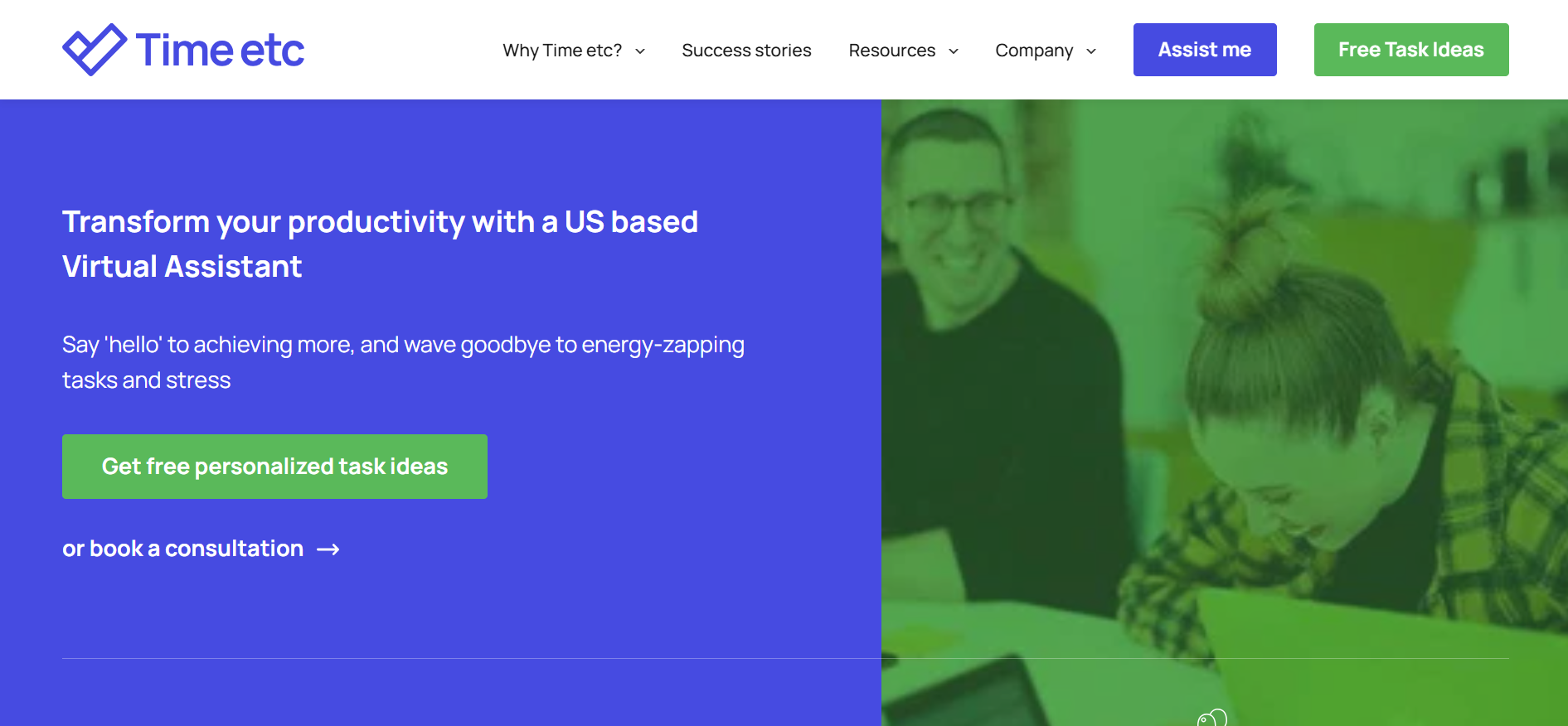
Time etc is a U.S.-based virtual assistant service that has operated since 2007 and assisted people in more than 22,000 companies.
It pairs clients with a dedicated, experienced assistant based in the United States.
What sets it apart for startups is a flexible, pay-for-what-you-use approach. Clients buy monthly bundles of hours, and on eligible plans, unused hours roll over into the next month rather than being lost.
The flexibility extends to how the relationship is structured. There is no setup fee, you can grow or shrink your plan at any time, and you can add or share assistants at no extra cost, according to the company.
Time etc, focuses on core assistant work handled by seasoned professionals. Typical tasks include administration, scheduling, research, and basic marketing and writing support, all backed by comprehensive non-disclosure agreements and a secure, encrypted environment.
The company frames the value mainly around saved cost and time. It says entrepreneurs save an average of 90 percent compared to hiring an assistant full-time, since you only pay for work actually completed.
5. Prialto

Prialto is a subscription-based managed virtual assistant service headquartered in Portland, Oregon. It is aimed at executives, teams, and businesses, including startups and entrepreneurial clients, and is built around a distinctive team approach.
The standout feature is that every assistant is a full-time Prialto employee rather than a freelancer.
Before a client meets them, assistants complete background checks and four weeks of core training, drawing on best practices refined over more than 15 years.
Continuity is where the managed model really shows for startups. Each client gets an Engagement Manager, and the assistant’s work is cross-trained among teammates who act as backup, so support continues even when an assistant is on leave or gets promoted.
The service covers the functions that free up a founder’s time. Prialto handles calendar and inbox management, task and workflow management, CRM and reporting, sales support, marketing coordination, travel, and document preparation.
Security and integration are designed for embedding into a real workflow. Prialto is SOC 2 Type 2 compliant and can work directly inside your systems, including from a white-labeled email address, so assistants operate as an extension of your team.
How to Choose the Right One
The best fit depends on what your startup needs and how hands-on you want to be. Fully managed options like Wing and Prialto reduce your oversight burden, while BELAY and Time, etc., emphasise carefully matched U.S.-based talent.
It also helps to weigh budget, talent location, and the specific roles you need filled. Comparing each provider against your own priorities, rather than features alone, is the surest way to choose well.
What is a virtual assistant service?
A virtual assistant service connects businesses with remote professionals who handle recurring administrative, sales, marketing, customer support, or operational tasks.
Managed services go further by also recruiting, training, supervising, and replacing the assistant when needed.
Why are virtual assistant services useful for startups?
Startups usually have more work than people, and founders need to protect time for sales, product, customers, and growth.
A virtual assistant can take repeatable work off the founder’s plate at a lower cost than hiring a full-time employee too early.
What is the difference between a managed and an unmanaged virtual assistant service?
A managed virtual assistant service handles recruitment, training, supervision, quality control, and continuity for you.
An unmanaged or freelance arrangement usually leaves hiring, oversight, replacement, and process setup in the client’s hands.
Are virtual assistants based in the United States?
It depends on the provider, so talent location is one of the first details to check.
BELAY and Time etc emphasize U.S.-based assistants, while Wing, MyOutDesk, and Prialto use broader talent models with managed support.
How quickly can a startup start working with a virtual assistant?
Timelines vary by provider, role, and how specific the startup’s requirements are.
BELAY says most clients are matched in as little as one week, while several managed providers use onboarding steps to place assistants inside your tools and workflows.
Which virtual assistant service is best for a startup?
The best choice depends on the startup’s budget, task volume, preferred talent location, and how much management support the founder wants.
Wing and Prialto are stronger fits for managed support, BELAY and Time etc suit teams that prefer U.S.-based assistants, and MyOutDesk fits companies that want broad operational coverage.
Should startups choose a managed plan or a flexible hourly plan?
A managed plan makes more sense when the startup needs ongoing support, backup coverage, supervision, and a more structured workflow.
A flexible hourly plan can work better when the workload is lighter, irregular, or still being tested.

Andrej Fedek is the creator and one-person owner of three blogs: InterCool Studio, CareersMomentum, and Bettegi. As an experienced marketer, he is driven by turning leads into customers with White Hat SEO techniques. Besides being a boss, he is a real team player with a great sense of equality.