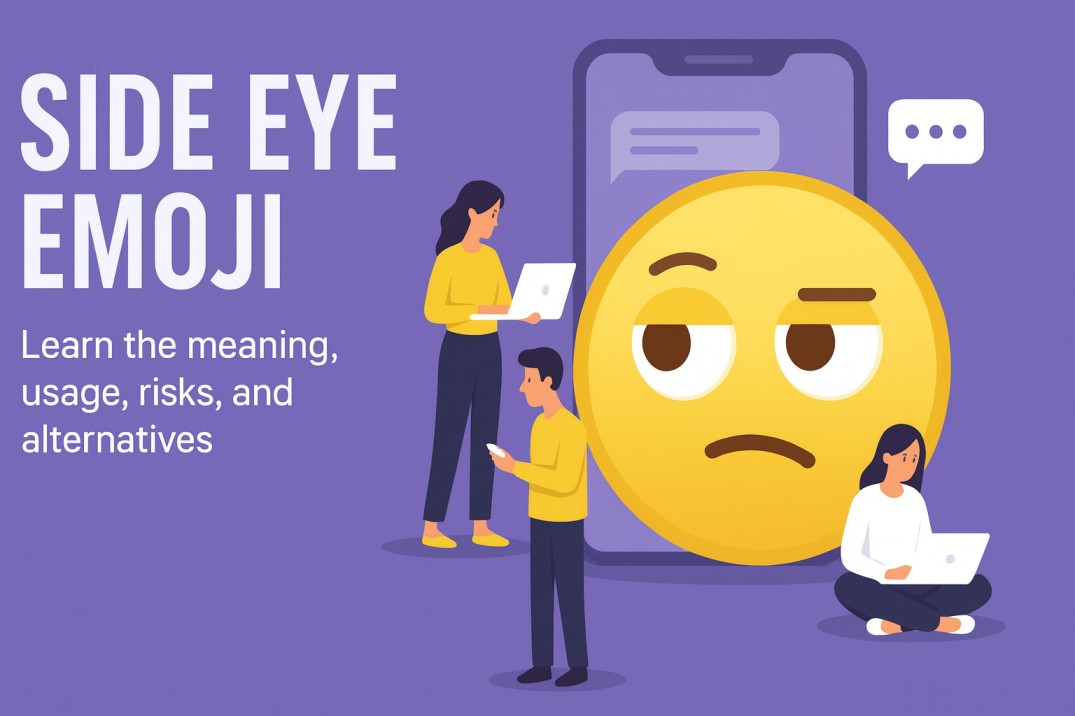
If you’ve spent any time on TikTok, Instagram, or in chaotic group chats, you’ve seen the side eye emoji everywhere. It shows up under messy stories, soft-launch drama, fake apologies, and any situation where someone deserves a look that says, “Seriously?”—without you having to type a single word.
But even though everyone uses it, the exact side eye emoji meaning isn’t always obvious. Is it rude? Is it playful, or low-key shady? And how is it different from SMH, the eye-roll emoji, or a simple 😂?
This guide breaks down what the side eye emoji actually communicates, how people use it across platforms, and when you should definitely not send it if you don’t want to start a fight.
The side eye emoji is used to show disbelief, low-key judgment, or playful shade, as if you are looking at someone from the corner of your eye and silently saying “really?”. In online chats and social apps, the side eye emoji meaning usually mixes sarcasm, suspicion, and mild annoyance, but it can also be flirty or humorous depending on who you send it to and what you write around it. 🙄 😒 😏
What Is the Side Eye Emoji?
When people talk about the side eye emoji, they usually mean any face that looks suspicious, unimpressed, or like it’s giving someone a look from the corner of its eye.
The most common candidates are:
- 🙄 Face with Rolling Eyes
- 😒 Unamused Face
- 😏 Smirking Face (in some flirty or petty contexts)
Even though none of them are literally named “side eye,” in real-world use, they all play the same role: they show that you’re not fully buying what’s being said.
The core side eye emoji meaning is a blend of skepticism, judgment, and attitude. It can be cold and dismissive, or warm and playful, depending on who you’re talking to and what else you write with it.
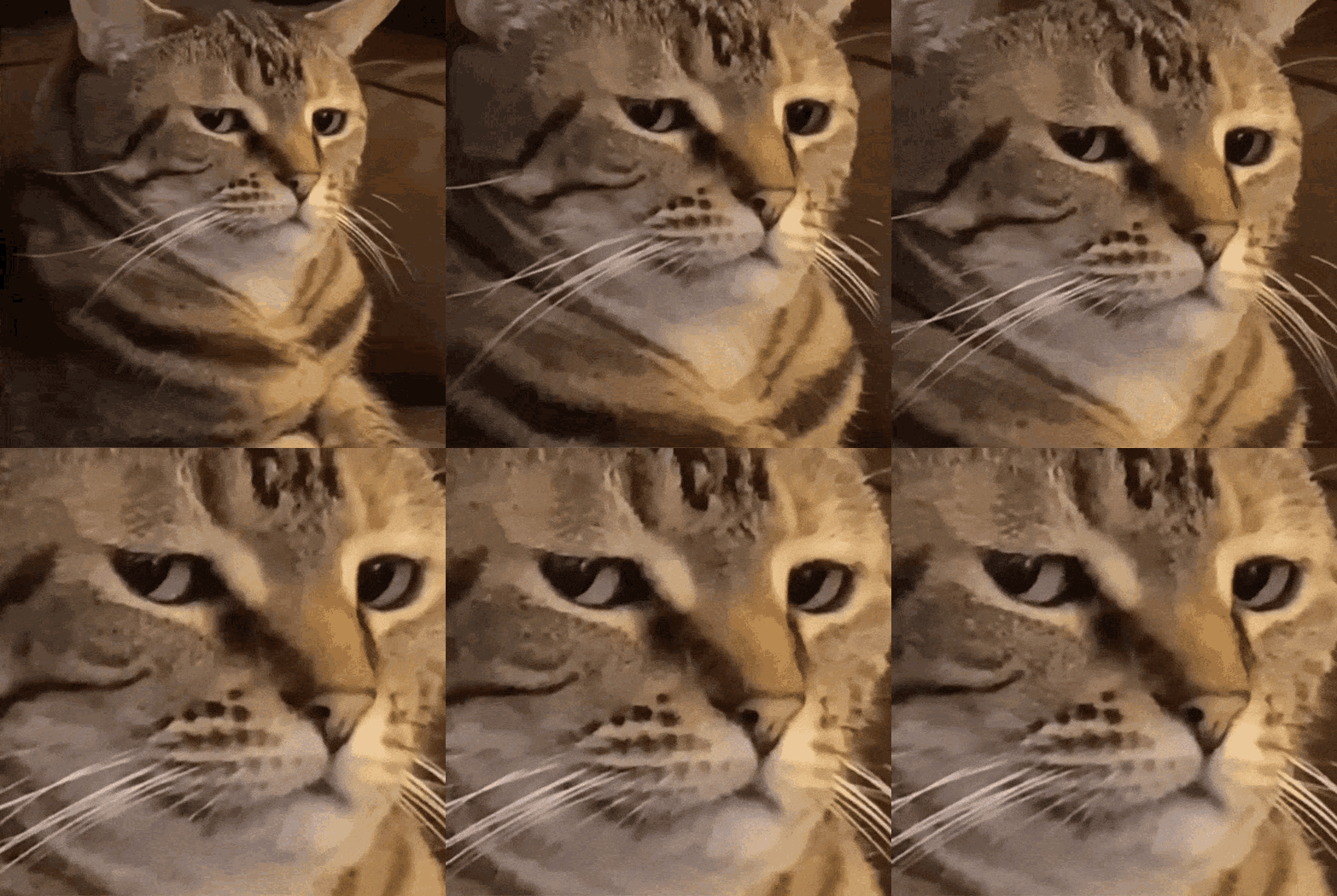
The Core Side Eye Emoji Meaning
The reason the side eye emoji is so popular is that it compresses a whole reaction into one tiny symbol. Instead of writing a paragraph, you send two characters and your friend instantly knows what you’re thinking.
At its heart, the side eye emoji meaning usually falls into one or more of these buckets:
1. “I don’t believe you.”
Someone says they’ll “never text their ex again,” and two days later they’re mysteriously “busy.” A simple “Sure you won’t 🙄” tells them you remember the last five times they said that.
2. “That’s suspicious.”
When a brand, influencer, or even a friend is acting out of character, the side eye emoji is your way of saying, “This doesn’t add up.” It’s soft suspicion, not full accusation.
3. “You’re being ridiculous.”
If someone is overreacting or making drama out of nothing, the side eye emoji politely calls them out without a full rant. It’s like a digital eye roll.
4. “I see what you’re doing.”
Maybe someone posts a “totally casual” thirst trap or a story designed for one specific person to see. Dropping a side eye emoji under it says, “You’re not slick, I caught that.”
5. “I’m fake-annoyed, but still laughing.”
In close friendships, the side eye emoji meaning often turns playful. You’re not truly angry; you’re pretending to be annoyed for comedic effect, like when a friend roasts you accurately.
Because it can shift between serious and playful so easily, context is everything.
Common Ways People Use the Side Eye Emoji
Let’s break down how the side eye emoji actually shows up in real messages. These aren’t rules, but they’re patterns you’ll see all over social media and chat apps.
1. Sarcastic disbelief
“You’re ‘so over dating’ but on a new first date every week 🙄”
Here, the side eye emoji meaning is pure sarcasm. You’re not buying the statement at all, and you want that to be obvious.
2. Calling out fake innocence
“Posting ‘I’m fine’ after a 30-story rant is wild 😒”
You’re acknowledging that the person is performing calmness after being clearly dramatic, and the side eye emoji underlines the hypocrisy.
3. Playful roasting
“So you ‘accidentally’ liked their 2018 pic at 2 a.m. 👀🙄”
Paired with a laughing or smirking tone, the side eye emoji becomes part of a lighthearted roast. You’re teasing, not attacking.
4. Flirty side eye
Sometimes the side eye emoji meaning shifts into low-key flirting, especially when combined with 😏 or 😉.
“Ohhh so you only dress like that when I’m around? 😏🙄”
Here, the side eye is more “I see you trying to impress me” than judgmental.
5. Self-aware cringe
You can also aim the side eye emoji at yourself:
“Said I’d sleep early… scrolled TikTok till 3 a.m. again 🙄”
In this case, you’re admitting your own nonsense and using the emoji to show self-deprecating humor.
Side Eye Emoji vs. SMH, Eye-Roll, and Other Reactions
Because it overlaps with many online reactions, it helps to compare the side eye emoji meaning with other common expressions.
Side eye emoji vs. SMH
- SMH (shaking my head) is more about disappointment or frustration. It says, “You messed up, and I’m not surprised.”
- The side eye emoji is more about suspicion, sarcasm, or “are you serious right now?” vibes.
You might use SMH when someone repeats an obvious mistake. You’d use the side eye emoji when they’re being fake, dramatic, or slightly ridiculous.
Side eye emoji vs. 😂 or 🤣
Laughing emojis show that you fully find something funny.
The side eye emoji is half humor, half judgment. You’re laughing, but with an asterisk.
Side eye emoji vs. 😭
😭 has become “I’m screaming / I can’t” in meme culture.
The side eye emoji is calmer and more controlled, like you’re sitting back and watching the chaos with a raised eyebrow.
How to Use the Side Eye Emoji Without Starting Drama
Because the side eye emoji meaning can easily slide from playful to rude, it’s worth being careful about when and how you use it.
1. Read the relationship, not just the message
With close friends who know your humor, the side eye emoji is usually safe—even expected. In newer friendships, professional chats, or with people who don’t share your sense of sarcasm, it can come across harsher than you intend.
2. Pair it with clarifying text
If you’re joking, signal that clearly:
“You really showed up 30 minutes late with coffee only for yourself 🙄😂”
Adding a laughing emoji or playful wording can soften the side eye emoji meaning and prevent misunderstandings.
3. Avoid it in sensitive conversations
If someone is venting about mental health, grief, abuse, or anything genuinely serious, the side eye emoji is usually the wrong choice. It can sound like you’re doubting or mocking their experience, even if you don’t mean to.
The Side Eye Emoji Across Platforms and Trends
The side eye emoji has its own life on different platforms:
- TikTok: Used in captions like “POV: you said you’re done with him… again 🙄” or as part of on-screen text. It often emphasizes hypocrisy or predictable behavior.
- Instagram: Common in comments under obvious thirst traps or “subtle” drama posts—basically saying, “We all know who this is about.”
- X (Twitter): Often combined with screenshotted receipts, like a quiet but deadly reaction to messy threads.
- Group chats: The side eye emoji meaning here is usually close to inside jokes—everyone already shares the context, so the emoji alone can be enough.
Over time, it’s also become a kind of shorthand for reaction. Instead of typing a long explanation, people use an emoji and let the context do the rest.
Some platforms actually had a dedicated side-eye emoji in their emoji picker and then removed it. Microsoft Teams, for example, used to include a very recognizable side-eye face that people relied on for a perfect mix of sarcasm and skepticism before it quietly got removed from Microsoft Teams.
That removal is a big reason why so many users now search for “side eye emoji” but only find lookalikes such as 🙄, 😒, or 👀. The attitude is still alive in chats and memes, but the original built-in side-eye emoji that many people remember is gone, which only adds to the confusion around its meaning and how to use it today.
When You Shouldn’t Use the Side Eye Emoji
Even if you love petty memes, there are moments when the side eye emoji is more risk than reward.
1. With your boss, teacher, or clients
Unless you have a very casual relationship and know they share your sense of humor, sending a side eye emoji upward in the hierarchy can look unprofessional or disrespectful.
2. During a serious conflict
In real arguments—especially via text—the side eye emoji meaning will almost always be read as hostile or mocking. If the goal is to resolve something, it’s better to use clear, straightforward language.
3. With people who struggle to read tone
Some people already find online communication hard to interpret. In those cases, sarcasm, caps lock, and emojis that carry attitude (like the side eye emoji) can easily create confusion or hurt feelings.
Practical Examples You Can Copy
To make the side eye emoji meaning more concrete, here are a few example messages that match common situations:
There is no official Unicode “side eye emoji” anymore, but several emojis have taken over its job in chats and comments. Each one carries a slightly different flavor of side eye, from playful to harsh.
🙄 Face with Rolling Eyes – The closest match to the classic side eye. Perfect for “really?” moments, light sarcasm, and fake annoyance with friends.
😒 Unamused Face – Feels more serious and tired of someone's behavior. Good when you want your side eye to sound a bit harsher or more disappointed.
👀 Eyes – Soft, observational side eye. Used when you are watching the drama, noticing something suspicious, or hinting that you caught the subtext without saying anything.
😏 Smirking Face – Flirty or petty side eye. Works when you want a mix of “I see you” and playful confidence, especially in teasing or flirty conversations.
In practice, people mix these together—like 🙄👀 or 😏🙄—to fine-tune the exact side eye vibe they want, from subtle shade to full “you're not fooling anyone.”
Every time, the side eye emoji adds that extra layer of “I see what’s going on” without you spelling it out.
Final Thoughts on the Side Eye Emoji
The reason the side eye emoji won’t disappear anytime soon is simple: it captures a modern, very online feeling—half amusement, half judgment, fully aware.
At its core, the side eye emoji meaning is:
- “I’m not convinced.”
- “I see the drama.”
- “You’re not as subtle as you think.”
Used well, it’s a funny, efficient way to react to hypocrisy, chaos, or obvious thirst traps. Used carelessly, it can make you sound passive-aggressive or unsupportive.
If you remember three rules, you’ll almost always land it correctly:
- Be sure the person understands your humor.
- Avoid it during serious or emotional conversations.
- When in doubt, add a word or two so your tone is clear.
Do that, and the side eye emoji becomes one of your most powerful tiny tools: a single character that says, “I see everything… and I have thoughts.”
What does the side eye emoji actually mean?
The side eye emoji usually shows disbelief, low-key judgment, or playful shade. It is what you send when you want to say “really?” without typing it out.
Depending on context, it can feel sarcastic, suspicious, mildly annoyed, or teasing between friends who understand each other's humor.
Is there an official side eye emoji on iPhone or Android?
There is no official Unicode emoji called side eye. Most people use 🙄 (face with rolling eyes), 😒 (unamused face), or 👀 (eyes) as their side eye emoji.
The classic yellow face looking sideways that you often see in memes and GIFs is usually a custom sticker, not a built-in keyboard emoji.
Is using the side eye emoji considered rude?
It can be, especially in serious conversations or with people who do not know your tone well. In those cases it can sound passive-aggressive or dismissive.
With close friends, the side eye emoji is often playful and used for light roasting or fake annoyance, so the same symbol can feel much softer.
What is the difference between SMH and the side eye emoji?
SMH means “shaking my head” and usually shows disappointment or frustration at something predictable or foolish.
The side eye emoji is more about skepticism and sarcasm, as if you are saying “I'm not buying this.” SMH reacts to what happened; the side eye emoji questions the person or their intentions.
When should I avoid using the side eye emoji?
Avoid the side eye emoji during sensitive topics such as mental health, grief, or real conflict, where it can look like you are mocking someone.
It is also risky with bosses, teachers, or clients unless you are sure they understand your humor. In those situations, clear language is safer than sarcasm.
How is the side eye emoji used on TikTok and Instagram?
On TikTok and Instagram the side eye emoji is often used in captions and comments to highlight hypocrisy, drama, or “subtle” call-out posts.
Creators drop it when they want viewers to know there is hidden context: a messy ex, a targeted story, or behavior that is clearly not as innocent as it looks.

Andrej Fedek is the creator and one-person owner of three blogs: InterCool Studio, CareersMomentum, and Bettegi. As an experienced marketer, he is driven by turning leads into customers with White Hat SEO techniques. Besides being a boss, he is a real team player with a great sense of equality.