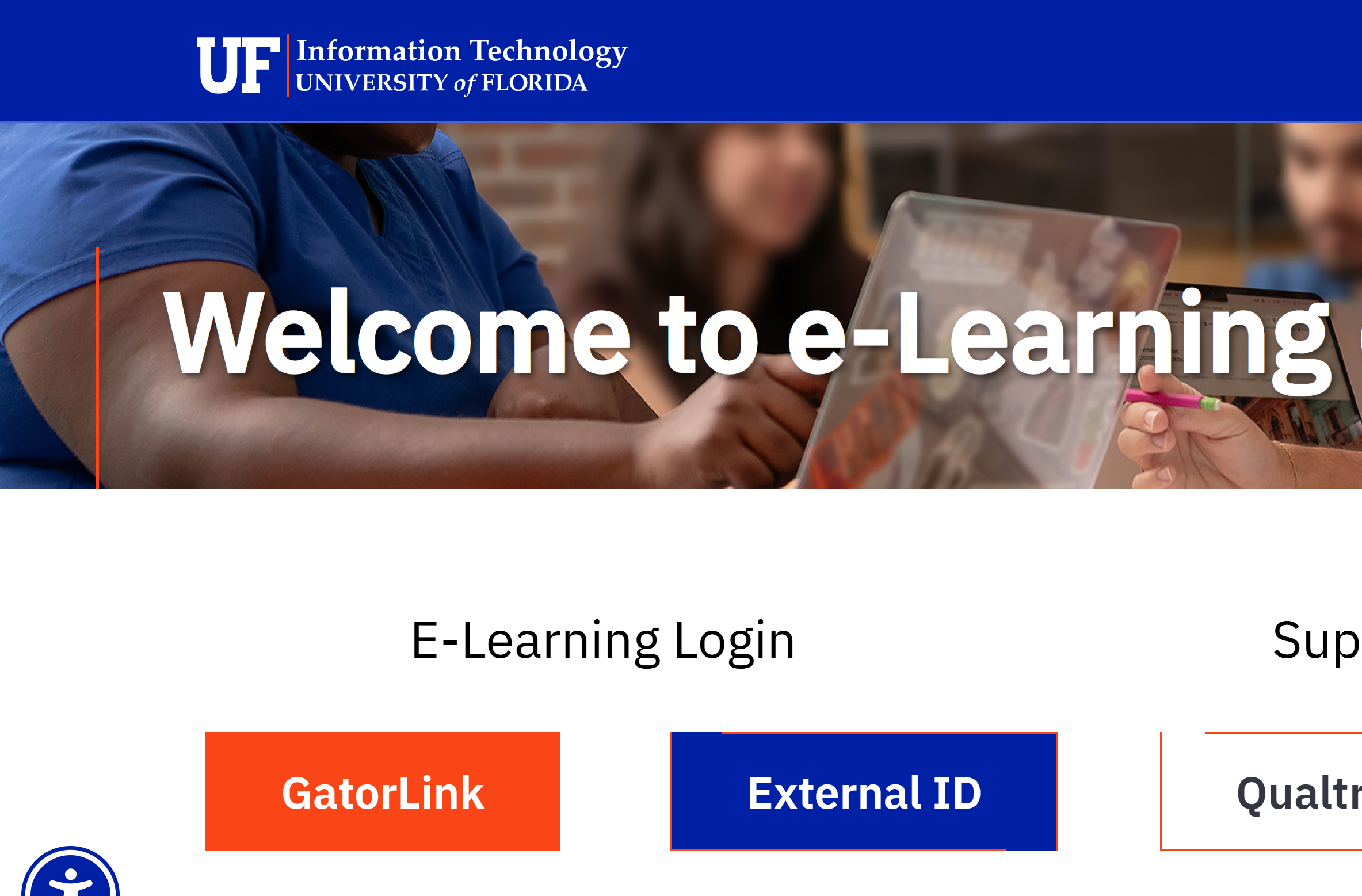
UF eLearning is the University of Florida’s central online learning environment that powers the school’s digital courses, academic tools, and virtual instruction systems. Students use UF eLearning to access course materials, participate in online learning activities, manage assignments, check grades, and stay connected to UF’s academic services. Because UF eLearning integrates enrollment data, authentication, communication tool,s and UF’s digital resources in one place, it operates as the core platform that supports the entire online learning experience at UF.
Whether you are a new student preparing for your first online semester or a returning learner troubleshooting access, understanding how UF eLearning works — and how it connects with ONE.UF and GatorLink are essential for navigating the University of Florida’s digital education ecosystem.
UF eLearning is the University of Florida’s centralized online learning environment that connects students to digital courses, academic tools, virtual classrooms, UF systems and essential learning resources. This updated guide explains what UF eLearning includes, how student access works, how it connects with ONE.UF and GatorLink, and what to do when the platform loads slowly or fails to display course content.
What Is UF eLearning?
UF eLearning is the overarching digital learning ecosystem used at the University of Florida. It brings together course delivery, UF academic services, identity management, enrollment data, student support and institutional integrations under one environment. Through UF eLearning, students access course materials, announcements, assessments, communication tools, UF libraries, proctoring systems, video modules, virtual applications and UF’s cloud-hosted learning resources.
Although Canvas is the primary learning management component, UF eLearning itself represents the broader infrastructure that powers UF’s digital instruction experience.
How UF eLearning Access Works
Student access to UF eLearning is tied to GatorLink identity verification and official UF enrollment status. When a student’s status is active in the university system, UF eLearning automatically provisions access to their digital courses and associated services. If enrollment changes, holds appear, or a student’s GatorLink credentials expire, UF eLearning access may be paused until the issue is resolved.
This system-wide synchronization ensures that course visibility, assignment deadlines, and exam availability always match UF’s official academic records.
UF eLearning vs ONE.UF
Many students confuse UF eLearning with ONE.UF, but the two serve different purposes.
UF eLearning is where learning happens — content, modules, lecture materials, online coursework and academic interaction.
ONE.UF, on the other hand, is where administrative and institutional management happens. Course registration, degree tracking, enrollment verification, financial services, UF holds, schedules, grades and account settings are controlled through ONE.UF.
Both systems work together: if registration is incomplete or a hold is active in ONE.UF, UF eLearning may not display the student’s courses.
UF eLearning Login Path
Although the learning interface runs through Canvas, UF eLearning access begins at the UF e-Learning portal, the entry point that authenticates students, checks enrollment data and redirects them to the appropriate course environment.
This access point verifies GatorLink credentials, confirms Duo 2FA and initiates session creation across UF’s digital systems. It keeps UF eLearning consistent and secure regardless of whether a student uses desktop, mobile browser or virtual learning tools.
Why UF eLearning Might Not Show Your Courses
When students report missing courses, the cause normally isn’t Canvas itself — it’s usually the UF eLearning provisioning layer that controls course visibility. Courses may not appear when an instructor hasn’t activated them, when enrollment hasn’t fully synchronized, or when administrative holds delay digital access.
Once UF’s internal system confirms registration and the instructor publishes the course, UF eLearning updates automatically and displays the subject in the student dashboard.
UF eLearning Performance: Why the Platform Loads Slowly
UF eLearning can load slowly for students when UF’s cloud servers are under heavy demand, especially during assignment deadlines or early morning login spikes. Browsers overloaded with extensions, old cookies or expired sessions can also trigger slow page responses and partial page rendering.
Opening the UF eLearning portal in a private window typically forces a clean session and speeds up load time. Using a modern browser and disabling heavy extensions also improves overall platform responsiveness.
UF eLearning on Mobile
Students frequently access UF eLearning through mobile browsers and UF-supported learning apps. While mobile access works smoothly, some features — especially video lectures, embedded materials and proctored content — perform better on a stable Wi-Fi connection. Mobile browsers that enable tracking protection or strict security modes may block UF resources, causing blank screens or missing modules.
A refreshed mobile session or switching networks typically resolves these issues.
How Long Do Students Maintain UF eLearning Access?
UF eLearning remains fully available to students for the duration of their academic enrollment at the University of Florida. Once a semester ends, course materials may remain visible for a limited time, depending on instructor settings and UF retention policies. However, full platform access continues only while the student remains actively connected to a UF academic program. When academic status changes, UF eLearning access is gradually removed in alignment with UF policy.
UF eLearning Support
Support for UF eLearning is handled through UF’s Computing Help Desk, which manages GatorLink authentication, course provisioning, access errors, and platform-related issues. For missing course content, students often receive faster resolutions by contacting their instructor, as instructors control publishing, module visibility, and course availability timelines.
What is UF eLearning?
UF eLearning is the University of Florida’s online learning environment that delivers course materials, academic tools, virtual learning features, and digital resources for UF students.
Why is UF eLearning loading slowly?
Slow loading often occurs due to outdated session data, cached cookies, or browser extensions interfering with the UF eLearning portal. Using a private window usually restores normal speed instantly.
Why is my course not showing in UF eLearning?
Courses may not appear if they are unpublished by the instructor or if your enrollment hasn’t fully synced through ONE.UF. Once updated, the course becomes visible automatically.
Why did my UF eLearning access expire?
Access expires when your academic status changes or when your GatorLink is no longer linked to an active UF program. Permissions adjust automatically based on UF policy.
Does UF eLearning work on mobile devices?
Yes, UF eLearning works on mobile browsers, though some content loads better on a stable Wi-Fi connection or with tracking protection disabled.

Andrej Fedek is the creator and one-person owner of three blogs: InterCool Studio, CareersMomentum, and Bettegi. As an experienced marketer, he is driven by turning leads into customers with White Hat SEO techniques. Besides being a boss, he is a real team player with a great sense of equality.